Myth and the Matrix of Meaning

Homo mythicus – I know it’s not a word, but perhaps it should be. Human beings are myth-makers.

We create meaning by telling stories. Personal anecdotes and nursery rhymes, factual reports and fairy tales, thin excuses and passionate confessions, epic histories and heroic adventures, religious creeds and scientific theories – these are just a few of the types of stories we tell. Identity itself (ego), that prize and protected treasure of contemporary individualism, is constructed out of countless storylines.

The meaning of life is what we make of it. Your personal myth is based on some very early stories your family told you, stories that carry assumptions about the way things are, where you belong, and what’s important in life. Such core beliefs are sown into the very fabric of your sense of self. You no longer question them – if you ever did – simply because they condition and qualify your grasp on reality at the subconscious level.

Matrix_1But our stories don’t simply arise spontaneously out of the creative imagination. It’s not like we got bored one day ten thousand years ago and decided to pass time spinning yarns by the campfire.

In other words, humans don’t tell stories because we have nothing else to do. Stories are how we orient ourselves in the world, and are what our worlds are made of. They carry the rhythms of our bodies and brains into the rhymes and reasons that make life meaningful.

In this blog post I want to offer up the idea that meaning itself is constructed upon a matrix of primary human concerns. If our stories are to mean something, they must take into account and work out an interpretation of life with respect to these primary concerns – and just these four.

Security. Human newborns are defenseless, vulnerable and dependent. One way that evolution accommodated our species was to get us delivered “prematurely” and prolong our development over the course of twenty years or so. During this time the operating system and local applications of our culture get downloaded into our brains. In varying degrees depending on our circumstances and early parenting, each of us emerges from childhood with a sense of security – that there is enough of what we need to live and grow.

Suffering. It’s also a fact of our existence that we don’t always get what we need to live and grow. Reality is not perfectly safe, and no security arrangement in life is permanent. This was the Buddha’s insight: Life is suffering. In the end you will lose your life, and you will lose much else along the way. Hanging on and gripping down only sets you up for anxiety, frustration and disappointment – in a word, for more suffering. The reality of suffering – chronic pain, sudden loss, heartbreak and loneliness – is something we cannot escape, though we do our best to medicate, minimize or distract ourselves from it.

Freedom. Another primary concern of humans is a function of our ability to take control (to a limited extent) of our bodies and the natural environment. The acquisition of skills and invention of various technologies has opened the scope of our freedom at an accelerating pace over the millenniums. Mastery at one level creates opportunities higher up – such is the calculus of human progress. Dependency at an early age gives way to autonomy as we grow up, taking more of life into our own control and putting more options at our disposal. A meaningful life is one you must choose – now more than ever before.

Fate. But there are limits, and every choice has its consequences. Whereas much about our world is made up and open to revision, the reality of life places constraints around our talents, strengths and possibilities. Genetic temperament deals us the cards and personal character plays them out, over time reducing the different combinations and alternate endings we might choose. And then there’s the fact that no one gets out of here alive. Probably much more than we know or can admit, the denial, avoidance and postponement of death drives much of what we do.

As the above diagram suggests, these four primary human concerns stand in relationships of paradox and tension. Specifically, security and suffering are really the polar opposites of a shared continuum, while freedom and fate are similarly related. None of the concerns can be properly understood and appreciated in any absolute sense. At this very moment, as you compose your personal myth of meaning, you are somewhere between security and suffering, freedom and fate. The patterns you weave are anchored on these four primary human concerns.

Matrix_2The matrix of meaning also includes what I’ll call four universal motifs, which show up everywhere in the stories we tell. A motif is a narrative theme; we might think of them as the major storylines that we weave together into our worlds. They also stand as pairs in creative tension.

Play. The meaning of your life is produced out of wonder, spontaneity, imagination and make-believe. Reality, very simply, is; but a world is something you put on – as in “putting on” a play. When you were a young child, role-play and pretending, dress-up and games were how you began to experiment with meaning-making. And of course, the costumes and toys you played with were also “propaganda devices” in your early socialization, by means of which gender instruction and class values were installed in your psyche.

Work. Eventually you needed to learn the importance of effort, determination and sacrifice in pursuit of certain outcomes and extrinsic rewards. This second motif shares the continuum with play, allowing for the possibility that your work might also be something in which you find creative enjoyment. It isn’t always the case, however. For many of us, work is simply what’s required to pay the utilities and put food on the table. Perhaps the most obvious difference between work and play is that play without purpose is infinitely entertaining, while work without purpose is one of the deepest hells we can know.

Love. Sex, intimacy, companionship and care – what would life be without these vibrant frequencies of human connection? Your earliest experience of love was likely in a nursing embrace, which may be why we have a difficult time distinguishing between feeling loved and feeling full, and why some of us eat when we’re lonely or feel unloved. The relative position of this motif to freedom and suffering in the matrix confirms what we eventually find out on our own: While love requires freedom, it moves us into attachments that eventually bring suffering.

War. You won’t find a culture anywhere on earth that doesn’t tell stories of adversarial relationships, interpersonal conflict, tribal conquest and political revolution. “Love and War” are certainly two motifs that play well together in the movies, probably with roots in our animal prehistory when males fought for sexual access to females. (What prehistory? you will ask.) As long as the primary concern of security is wrapped up in territory, resources and possessions, the borderland menace of invaders and thieves will keep the war motif strong in our minds. There’s also something about adversity that, as we say, builds character.

Matrix_3That’s the matrix of meaning: Four primary human concerns and four perennial narrative motifs are the “stuff” of which all stories are made. As the temperament, life circumstances, and developmental career of each person is unique, the pattern of meaning that we can call one’s personal myth (along with its corresponding world) will be individualized to that extent.

The matrix reminds us that our stories and the meaning we construct out of them are serious business. They are not supposed to distract us from the responsibility of making our lives count for something, and they shouldn’t divert our thoughtful reflection away from the challenges we face. The stories we tell at the individual, interpersonal, tribal and cultural levels will be meaningful in the degree that they assist us in spinning webs we can live in, webs that connect us in relevant ways to each other and to our home planet.

Above all else, our stories, worlds, and webs of meaning need to lift us out and provide a way back into the present mystery of reality.

Unconditional Forgiveness and the Bankruptcy of Retribution

Recently I’ve been exploring the topic of forgiveness and how Jesus’ teaching on the topic moved the West beyond theism with respect to human morality. The gist of my argument is that Jesus clarified forgiveness of the enemy as the only way through the impasse of retribution, vengeance, and redemptive violence – the latter term referring to a “solution” which requires someone to suffer for sin before things can be made right.

In the early days, Yahweh (tribal deity of the Hebrews) was rather violence-prone and bloodthirsty, taking life as satisfaction for disobedience and iniquity. There are even hints in the Bible that Yahweh took some time to get past his need for the blood dedication (sacrifice) of human firstborns – an advance, certainly, toward a more enlightened morality.

During the intervening centuries Yahweh developed the ability to look upon outsiders with compassion and even forgive sinners … up to a point. While his human devotees – especially some of the prophets – were envisioning what the world would be like if Yahweh simply “let go” of his need for vengeance and appeasement, dreaming of the day, with Jeremiah, when god would forgive without the prerequisite of repentance, Yahweh just couldn’t let go of his reluctant obligation to condemn sinners.

By the time of Jesus, then, there were at least two strands of theological development vying for the hearts and minds of true believers. The dominant strand insisted that god is holy and just and simply cannot tolerate disobedience. If the sinner refuses to repent, then god has no choice but to reject and condemn. If this sounds like a limitation on god’s power and love, the orthodox tradition resolved the question by saying that god had set up reality in the very beginning according to the balancing principle of retribution.

Similar to the oriental notion of karma, this principle simply says that “you get what you deserve” – maybe not right away, but eventually things are going to be made right. Yahweh’s so-called obligation is indeed reluctant – he doesn’t necessarily want to destroy sinners, but still he must abide by his own rules. The idea that there is something higher than god putting limits on divine (and human) freedom was an essential linchpin of orthodox morality, and remains so to this day.

The other tradition, definitely a minority report by comparison, was less mechanistic and more romantic – concerned less about keeping “the system” intact than promoting the dream of a nonviolent reconciliation of sinners to god. What if the god who led our nation out of captivity is also at work in other nations, providing for human liberation and prosperity in ways peculiar to their historical conditions? So dreamed the prophet Amos (see Amos 9:7).

Later on, Jeremiah looked forward to a time when god would set aside the rules, accomplish a radical preemptive forgiveness, and put the knowledge of his will in the hearts of people (see Jeremiah 31:31-34). In that day there will no longer be a need for sacrificial priests, ranting preachers, or Sunday school teachers. The mechanism and official procedure for our human repentance to god – practically the entire religious establishment – would be transcended and left behind.

But of course it had to remain just a dream, for the simple reason that its progress into reality would have entailed too much revamping of orthodox religion and its incumbent deity. In fact, if god really is – not just in our dreams but in reality – for all people, and ready to forgive without repentance in order to get everything moving forward into freedom and true community, then much would need to change. Most importantly, the old god – the author, supervisor and executioner of retributive morality – would have to go.

Now, that’s something terrifying to consider, especially when just about every feature of your identity is drawn from your identification with this god. If you go forward with it, some explanation will be in order as to why for so long you used god in the justification of your superiority over others, of your bigotry and violence against unbelievers and people differently oriented in the world.

broken chain

Will you admit that you had it wrong back then? That you were advancing your own agenda and not god’s? Or will you finally realize and honestly confess that god is not an objective, absolute, and unchanging reality as you once believed?

Such are the questions that begin exploring the cultural terrain of post-theism. As we go along, it becomes easier to stay open to the idea that god is a representation in mythology, the central metaphor of the mystery that supports our existence and inspires our faith. It’s not necessary to defend the validity of earlier encounters with god as literal events, actual interventions of a deity who exists separate and apart from us. To say that such scriptural accounts are just more mythology does not diminish their meaning. Indeed it becomes possible once again to appreciate this meaning in proper context, as part of the Great Story of our spiritual awakening as a species.

What Jesus did was “simply” but bravely step into reality without the satisfaction and security in knowing that people get what they deserve. He realized forgiveness as the power to let go and move on – not away from one’s enemy but back into relationship. Taking hold of the retributive reflex before it compels an act of retaliation and vengeance provides just a moment for reconsideration, but a moment is all that is needed.

Jesus believed that waiting for our enemy to see the light and plead our forgiveness is not something that will help us forward into reconciliation, community and genuine peace on this planet. Instead, forgiveness needs to come first, it must be preemptive and unconditional, not waiting around for the conditions to be right or the risk to go away.

Bringing love back into the face of hatred – that is to say, not energizing it with matching countermeasures but responding with kindness and benevolent strength – will result in the aggression eventually spending itself into bankruptcy. It may take some time, and many will get exploited or consumed along the way, but the Day is coming when the true enemy (ignorance, conviction, hatred and violence) and its many human incarnations will simply collapse out of exhaustion.

Finally the seed will break open and New Life will spring forth.

If we are to follow Jesus in this way of radical forgiveness, something needs to be done about the tribal deity of Christian orthodoxy. Tragically, this same orthodoxy took Jesus hostage in the opening centuries of establishment, re-making him into the savior who rescued the world from god by dying on a cross and satisfying the conditions against our forgiveness.

To its credit, the orthodoxy got it half right. Jesus did rescue us from god.

Jesus, Forgiveness, and a Brave New World

In my defense of a new humanism, I made the case that Western consciousness shifted into a post-theistic morality with the radical teachings of Jesus. Where the motivation to do what is right had been conditioned by a powerful external incentive – approval, inclusion, divine favor and final salvation (or the opposite if you break the rules) – Jesus opened a new way.open_prison_door

The incumbent deity (Yahweh) had come out of a mythological background of a small near-eastern tribal confederation of nomadic invaders who managed the conquest of agricultural settlements in the land of Canaan. As a warrior god, Yahweh possessed little tolerance for diplomacy and compromise. But to his credit, over time he did start to soften up a bit, balancing wrath with mercy, vengeance with compassion, retribution with forgiveness.

Yahweh’s war box (the ark of the covenant), which had been carried at the front lines of Israel’s army, giving them a supernatural advantage over the indigenous farmers they massacred, was already lost in the misty hinterland of folklore and legend by Jesus’ time. Nevertheless, Yahweh’s accent on purity and obedience was still strong, and it resounded in the religion that remembered and worshiped him.

Let’s be clear: Yahweh was capable of forgiveness. As long as certain steps were taken – that is to say, insofar as particular conditions were met and satisfied by the repentant sinner – Yahweh could be persuaded to let the poor soul back into his good graces. There was a limit to this generosity on Yahweh’s part, of course, and repentance needed to happen first. God is no sucker.

Already 600 years or so before Jesus, the prophet Jeremiah had fantasized a day when god would simply drop the charges against humanity and enter a new relationship with his people. The knowledge of his will would transcend instruction and be grasped intuitively, written on their hearts. Fortunately for Jeremiah, he didn’t put a date on this future New World.

What would inspire someone, even god, to just “let go” (forgive) and rip up the rap sheet on sinners? What purpose could this serve? Why violate the Rule that had set the rules in the first place? Isn’t that tantamount to throwing out everything – responsibility, accountability, decency and fairness – upon which the moral order depends? So it seemed. And so Jeremiah’s little nightmare about unconditional forgiveness and the beginning of a New Age was rolled up, tucked away, and forgotten.

But the seed was planted. Once an “impossible” virtue like compassion for outsiders, charity for strangers, or mercy for those who just might be getting what they deserve – once the virtue is projected into the collective consciousness, it is just like a seed. It may sit there, covered by dirt and “forgotten” under the urgencies and concerns of daily life for many, many years. Decades or even centuries. But there it is nonetheless, waiting for the conditions to be right.

In Jesus’ time, the conditions were right. But just as important as a generally favorable milieu is the individual who is sufficiently inspired, courageous, and “morally reckless” to announce the moment of awakening and risk everything for its actualization.

16 When Jesus came to Nazareth, where he had been brought up, he went to the synagogue on the sabbath day, as was his custom. He stood up to read, 17 and the scroll of the prophet Isaiah was given to him. He unrolled the scroll and found the place where it was written:

18 “The Spirit of the Lord is upon me,
    because he has anointed me
        to bring good news to the poor.
He has sent me to proclaim release to the captives
    and recovery of sight to the blind,
        to let the oppressed go free,
19 to proclaim the year of the Lord’s favor.”

20 And he rolled up the scroll, gave it back to the attendant, and sat down. The eyes of all in the synagogue were fixed on him. 21 Then he began to say to them, “Today this scripture has been fulfilled in your hearing.” (Luke 4:16-20)

As Luke tells the story, Jesus made the announcement as part of a sabbath sermon. In that day, a member of the synagogue might walk up to the front of the room, be handed a scroll of scripture, read the passage and offer an interpretation. In this case, Jesus opened up the prophecy today known as Third Isaiah, likely written just after the return to Jerusalem from exile in Babylon (post 538 BCE).

The “year of the Lord’s favor” was another mythic reference, going “back” to the ancestral past when the people of Israel celebrated a Year of Jubilee. Every fifty years – after seven cycles of seven years – all debts were forgiven, slaves were set free, and lost property was returned to its original and rightful owners.

Jubilee was an archetype of the New Beginning, the clean slate, a fresh chance to start again. It’s what the human spirit longs for. But it never made the transition from mythic event to actual occasion. For practical considerations alone, no society could survive such a radical shake-up of its economy as Jubilee represented. It was what we call an ideal.

In Isaiah’s original, the last phrase read by Jesus is actually part of a couplet that finishes with “and the day of vengeance of our god.” Isaiah’s fantasy, then, was of a time when Yahweh’s favor on his people would be realized and his judgment meted out on their enemies at last. There was still hell to pay.

We need to imagine the force of shock that must have seized the congregation when Jesus, after leading his audience along the lyrical rhythm of this well-known and much-loved passage, suddenly stopped short of full circle, rolled up the scroll, and sat down. In their minds that last line was screaming for validation, but Jesus denied it permission.

What he did next was even more scandalous. He looked up at the congregation and declared, “This vision is being fulfilled today, right here and right now.” Today is Jubilee. All debts are forgiven, the prison doors have been thrown open and everyone is free. A new age has begun and a new order is in effect starting today.

In his evangelistic campaign across Galilee, Jesus called this new age and new order the “kingdom of god.” It’s coming up out of the dirt, he said. It shows up around the corner, in the messiness of life, from the least likely of places.

Not long afterwards, when Christian orthodoxy did a make-over on Jesus and turned him into god, this radical challenge to conventional morality would be neutralized. Of course! Who else but Jesus – very god in the flesh – could manage such a feat? For the sake of our salvation he interceded for us, securing god’s favor and saving us from his wrath. By dying in our place, paying the penalty for our transgressions, and taking upon himself god’s judgment against sin, Jesus is our salvation.

The old game is still in effect, however. If you refuse to “believe in Jesus as your personal lord and savior,” your destination in the afterlife won’t be pleasant. At all. Jesus managed to turn god towards you; now you must turn to god by accepting Jesus as your savior. For those who don’t, “the day of vengeance of our god” awaits. Whew! Nothing’s really changed.

As Matthew tells the story, the disciple Peter approached Jesus one day with a question. “According to the rules, god expects me to forgive my enemy three times” (a number that represents perfection). “What do you think? Should I forgive my enemy as many as seven times?”

Perhaps in his desire to impress Jesus with his above-and-beyond righteousness (doubling the old rule and adding one more for effect), Peter was looking for that surprised admiration that any student craves from the teacher. See him standing there, puffed up and plucking proudly at his suspenders.

Jesus replied: “Why are you counting? Forgiveness is not a response to an acceptable repentance. It must come first and never keep a tab. Let go of your anger and your hurt will heal. Extinguish the insatiable flame of vengeance and you will be free. It’s time for you to be strong and take the initiative: Stop tracking offenses and don’t wait for your enemies to repent. Let go, open up with love, and just see what happens.”

If your god keeps a record of sins, hates his enemies, and can’t wait to make them suffer – or perhaps is bound by a reluctant obligation to condemn sinners and unbelievers – then it’s time to leave that god behind and step into a brave new world.

There, the seed is planted … again.

Mystical Faith and the Way to Peace

And now we began to drive through that narrow strait. On one side was Scylla and on the other Charybdis. Fear gripped the men when they saw Charybdis gulping down the sea. But as we drove by, the monster Scylla seized six of my company–the hardiest of the men who were with me. As they were lifted up in the mouths of her six heads they called to me in their agony. But I could do nothing to aid them. They were carried up to be devoured in the monster’s den. Of all the sights I have seen on the ways of the water, that sight was the most pitiful.

– Homer’s The Odyssey

S_CIn Book XII of Homer’s classic Odysseus must steer his ship through a dangerous strait, carefully threading his way between two monsters on either side. Charybdis is a whirlpool infamous for pulling vessels into its vortex and crushing them beneath the water, while Scylla, on the opposite bank, is a six-headed monster who reaches out and plucks sailors from their decks and devours them whole, if the captain should venture too close.

Beyond the strait is a beautiful island where Odysseus and his men will find peace and refreshment. But that fantasy must be suspended in the face of their present challenge. Circe had counseled the captain to not allow his panic over losing his ship to one monster drive him, by overcompensation, into the other.

And yet, that’s what happens: In their fear over falling into the swirling void of Charybdis, some of Odysseus’ men scramble to the other side of the deck, whereupon they are snatched up by Scylla and lost forever.


In my last post I offered a way of understanding yourself as driven, motivated, and inspired by the impetus of desire. Composed of a sensual, emotional, intellectual and spiritual nature, you seek different types of experiences, satisfying fundamentally distinct needs.

The pursuit of pleasure, though exploited by advertising and a slippery slope into addiction, is an evolutionary set-up designed to move you toward what your body needs to live and reproduce. Emotionally you seek happiness, which likely arose in correlation with the strong social affinity of our species. The quest for meaning compels you to construct an intellectual model of reality, called your worldview, that will orient your life inside a context of significance. Finally, your spiritual nature desires authenticity, wholeness, communion and peace – all summarized under the single term well-being.Quad

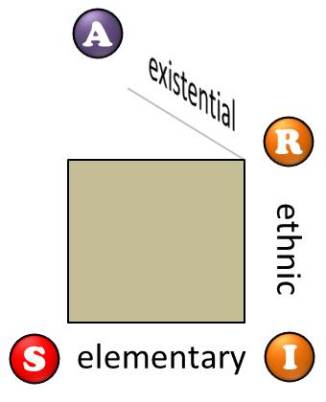
I offer the diagram to the right as an abstract representation of the artistic illustration above, from the scene out of Homer’s Odyssey. The “strait” that Odysseus – Captain Ego – must guide his ship through begins at the bottom of my diagram, which corresponds to the developmental stage of infancy and early childhood.

Pleasure and its opposite, pain, were the guides that helped you stay inside that provident niche where your basic needs could be satisfied. Spontaneous reflexes and deep unconscious drives in turn provided clues for your caretakers to know what you needed.

Through a process known as socialization, your cultural handlers (parents, teachers and other adult higher powers) exploited this natural preference for pleasure and avoidance of pain, using it to shape you into a “proper” member of the tribe.

In this way, “right and wrong” were associated, by the pairing of pleasure (reward) or pain (punishment), to your evolutionary interest in good (pleasant, tasty, nourishing) versus bad (unpleasant, disgusting, toxic). Thus the moral categories of “good” and “evil” have their roots in your natural inclinations. The moral pedagogy of your tribe first anchored into, re-coded, and then abstracted from the sensual intelligence of your body.

Because no culture is perfect and no family is without its shadows, your moral development might have gotten hooked and saddled with shame, guilt, and self-doubt. Such complications can make relationships difficult depending on whether you cling to others for security and reassurance, antagonize and push them away, or remove yourself emotionally to avoid being swamped.

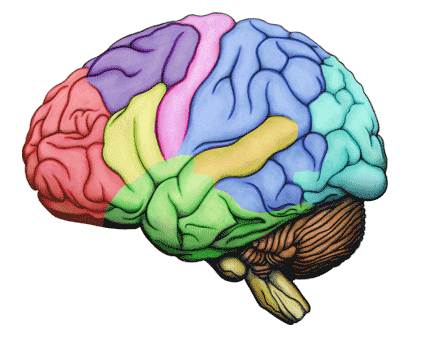
This is where I see Odysseus as Captain Ego, on the narrow path between Charybdis and Scylla. In the painting above, Charybdis (the whirlpool) is on the right and Scylla (the picker) is on the left – corresponding nicely to the right and left hemispheres of your brain.

Although many functions are shared across the two hemispheres and their deeper networks, neuroscience has discovered stronger (more numerous and vibrant) connections between the so-called right brain and the body. Your early development was dominated by right-side processing, which was all about emotional formatting, making necessary attachments, and setting the general “feeling tone” of your emerging worldview.

It took a bit longer for your left brain to get involved. Left-side processing involves cognitive functions of denotative language, classification, cognitive abstraction, forming inferences, and constructing theories that explain and predict reality in meaningful ways. This world-building work picked up the deeper emotional codes of your right brain and incorporated them into a more elaborate perspective on reality.

So, whereas your emotional right brain communicates with your body and its visceral interior, your rational left brain uses the scaffolding of language to arrange and interpret your external environment.

But again, because no one gets through the gauntlet of childhood without bumps, bruises and a few psychological scars, the larger evolutionary task of steering your way between emotional engulfment and intellectual nitpicking – watch Scylla picking off Captain Ego’s crew – can be a tricky ordeal.

Perhaps, as happened to Odysseus, there is a tendency in all of us to swing our ship away from the prospect of getting overwhelmed, exhausted in emotional struggle, and pulled down into a hopeless depression. In compensation, we pick things apart, strip out the passion, and lock our life’s meaning inside small stuffy boxes of dogmatic conviction.

Either way is death: either the death of enjoyment (happiness) or the death of significance (meaning). It’s possible that an entire lifetime (or more) can be spent tacking back and forth, steering clear of suffering but dying inside our convictions, or refusing to take a stand for anything and consequently falling for (into) everything.

The real tragedy, however, is that your spiritual nature and the desire for wholeness, communion and well-being is kept from advancing to the Isle of Serenity beyond. Of course I’m not talking about paradise after you die, but the bliss that awaits your realization this very moment, on the “other side” of the challenge.

Between Scylla and Charybdis is a very narrow path indeed, one that requires focus and control, mindfulness and balance, equanimity and orientation, along with a deep internal calm and full release to the present mystery of reality. A large number probably never make it.

This mystical faith in being-itself is the only way through.

What You (Really) Want

At the very deepest level life is desire. Because organisms are open systems – not closed and self-sufficient, but dependent on their environments for what they need to survive and prosper – desire is active even at the cellular level. As our focus moves upwards to higher levels of organizational complexity and consciousness, desire becomes appetite, interest, longing, curiosity, aspiration and quest.

While your life at the individual and daily level may seem hopelessly complicated at times, the truth is that as a human being you seek just four things. Well, they are not really “things” in the straightforward sense, but rather distinct kinds of experience. It’s not really a successful career, a large social network, lots of money, or even everlasting life in heaven after you die that you really want.

What are these four types of experience, the pursuit of which makes you just like every other human being on this planet? Very simply, you want pleasure, happiness, meaning, and well-being. The present arrangement of your life, as well as the ambitions that get you out of bed in the morning and keep you awake at night, is fulfilling to the degree that you have managed to keep these four pursuits in a healthy balance.

Quad

Let’s look at each one briefly, and then explore how we human beings can lose this balance – and consequently lose our way in life.

You are a sensual being (there, I said it). What I mean is, you are wired and connected to reality by sensory pathways that deliver signals to your brain and body, spontaneously eliciting reflexes that move you toward what you need to survive and away from what might be harmful or dangerous. Pleasure is the lure that gets you to reach out for the big juicy apple. Your cells require its vitamins, fructose and fiber to do their thing, but you need incentive to pick it off the tree and take a bite. Apples are delicious and pleasing because they contain the raw energy your body needs.

Once in a while the apple turns out to be spoiled rotten inside, and your bite into it brings not pleasure but disgust – a signal that it is not gustatory, not tasty and edible, not good for you. Pain (disgust in this case) is the sibling to pleasure, and its purpose is to keep you from doing that for too long, which could result in sickness; or in other situations, in injury and death.

Your body is keyed into pleasure and the pursuit of it because organic evolution has made powerful pairings between the requirements of physical health and the numerous “delivery systems” (like the apple) in your environment that carry the goods. Pleasure feels good, and you typically want more of it. Until you get too full of apples; then the opposite signal of pain kicks in and you start to feel uncomfortable and nauseated.

The advertising industry has devised many clever ways of associating (the promise of) pleasure with purchases that really have nothing to do with what your body needs. A beautiful human model slunk over the hood of the latest model car excites our desire for sex and romance, and then anchors this feeling to the automobile. So we rush out to the dealership to find our beckoning lover. Sixty months of financing beyond our means is not too much (at least at first) to have the pleasure we’ve been promised.

In addition to pleasure, however, you also want happiness. This is because you are an emotional being as well as one that’s wired up for the pursuit of pleasure. Being happy – feeling positive, content, cheerful and optimistic in life – is another enticing payoff for getting into arrangements that (again, promise to) provide the support you need.

Happiness is a very attractive experience, and people spend gobs and gobs of their money, effort, and time in pursuit of it. Thomas Jefferson believed that everyone has an “inalienable right” to chase it down, though he probably didn’t foresee the reckless extent to which later generations would go at it.

Quite often – probably most often; okay, all the time – people seek professional help to find happiness. They want desperately to feel better emotionally about their lives, their relationships, their past, or themselves. This will usually involve a delivery system more complicated than an apple, along with a probability of complications and side-effects that carry some risk as well. But the risks are worth it – or so we are willing to believe.

What else do you want? Meaning. This is because you are an intellectual being equipped with a cognitive intelligence that picks up patterns out of the whirligig of reality, or makes them up where they may be missing. Patterns are rhythms and designs, constellations and correlations that connect things and suggest other orders of significance. The root-word sign in significance names something that points beyond itself and “translates” the mind into a cross-referencing system where its meaning is revealed.

Your mind is a factory of signs. The language you learned from your tribe established the basic conceptual building-blocks of your world. By nature your mind is never content with a closed box of meaning, but soon itches with curiosity to know what’s “outside the box” and around the corner of the latest theory. Of course this natural curiosity can be discouraged by your tribe (and often is), to the point where asking questions is tantamount to doubting authority and opening the box becomes a punishable sin.

The social construction of identity, of what we call the ego, involves the methods by which your tribe exploited your natural desire for pleasure, happiness, and meaning. Especially in the early years, your sense of self was powerfully defined by the preferences, attachments and convictions conditioned into you by your cultural handlers (parents and teachers).  Through the early stages of ego formation, a human being was made into “one of us” – an insider, a good boy or girl, a believer.

But the ego itself is an illusion, fronting a persuasive charade of reality while being nothing  more than a rather sophisticated role play. This appearance of solidity is tested in times of doubt and disillusionment, but like a frantic little spider, the ego rushes out to the rupture and weaves a story that will restore security. If it doesn’t take too long, the trance can go on without serious interruption.

But the web does break, predictably. This is because you are a living, growing, and evolving being. The tight suspension that supports your identity, your world, and all the things that impinge on your happiness cannot keep you from growing up and out of your current disguise. It’s not just that you want more happiness and more meaning – although, again, the advertising industry is ready to accommodate your fantasy. Flip the channel and you’ll see what I mean.

Something else is going on.

You are also a spiritual being – not a soul inside a body, but a being that engages reality with a spiritual intelligence. What are you looking for in this case? What qualitatively distinct type of experience is your soul after? Not pleasure, not happiness, and not even meaning, but well-being.

What is well-being? At first blush, it is about being well, which is linguistically derived from being whole. This is not an experience to be achieved, and it’s not about clutching more things and people into your life to make it complete. It is a realization that all is one and you are a participant in something very much larger than your little ego and its meticulously managed world. Something profoundly mysterious and beyond words.

You are inwardly grounded in this mystery as well as outwardly connected, directly or indirectly, to every other existing thing.

The mystical traditions call this experience communion, from com (with, together) and union (one). Your spiritual intelligence as a human being gives you the ability to be conscious of this mystery, even if you can’t describe it and make it finally (once and for all) meaningful. Soul is that standpoint in reality where you can touch the unity of all things and release your conscious self to the deep grace of being-itself.

And then – ploop! just like that – your mind wants to put labels on it, get a box around it, and convert the experience into a belief. Spirituality is made into a religion, mystery collapses into meaning, liberty is turned into obligation, and what was once a life-changing insight gets pinned like a butterfly to the rigid board of orthodoxy.

Very truly, I tell you, unless a grain of wheat fall into the earth and dies, it remains just a single grain; but if it dies, it bears much fruit.

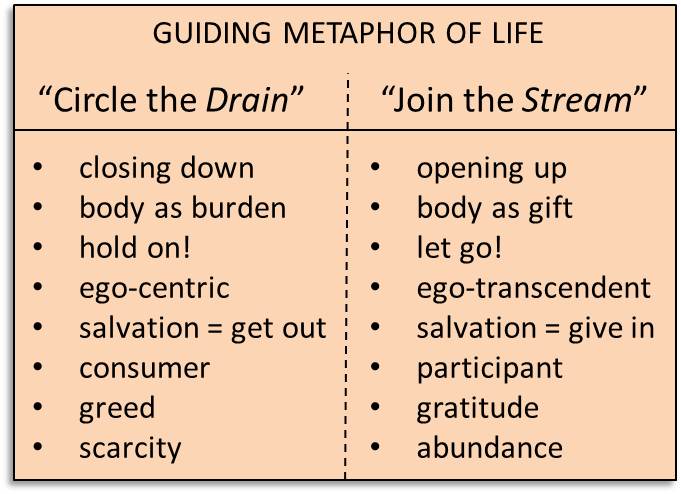
To experience well-being, you need to let go of the attachments and convictions that define you. Like the hard shell of the seed which must relax, let go, and open up to allow the green fuse to emerge, ego-identity and the little world you manage must surrender to the soul’s desire.

Until you can give yourself over to the mystery of life in this moment, your human fulfillment is postponed. Let go of fear. Let go of pain, and even of pleasure. Let go of doubt – and let go of certainty, too. Let go of what you think you need to be happy or have a meaningful life. Let go of “me, myself and I.”

Just let go. All is one. The provident mystery of reality will gently catch you. You will know the truth, and the truth will set you free.

Humanism in a New Key

My recent reflections on the cultural shifts in the West over the past 2500 years or so has started to uncover the real essence of the post-theistic movement overall. Whether it was the breakthroughs in natural philosophy (science) and politics (democracy) back in fifth-century BCE Greece, or the breakthrough in morality represented in Jesus’ radical message of love for the enemy, the general effect of these transformations has been a growing understanding of our place in the cosmos and our responsibility in the evolutionary destiny of our species.

Each one of these transitions moved us into a different and new way of being in relationship with our home planet, to the social order, or to other humans – particularly those who don’t share our beliefs or care to have us around. I have argued that our advancement through these various progression thresholds – defined as evolutionary surge-points where development is suddenly accelerated and shifted to a new level – also moved us into a post-theistic worldview relative to the threshold in question.

So science has moved us increasingly into a view of reality that doesn’t require a reference to god as the hidden agency behind nature. Similarly, democracy has liberated us from political systems of authority and subjugation that were regarded for many thousands of years as established and ordained by a god above the throne.

And then, with the radical ethic of Jesus as expressed in the imperative of love for the enemy (summarized as unconditional forgiveness), the long-standing idea of god as the supreme prosecutor of moral evil and executioner of our enemies had to be released and transcended – if we were to move forward into Jesus’ vision of a worldwide community of full inclusion.

There is textual evidence to suggest that Jesus went so far as to reconceive the retributive god (Yahweh) into an all-loving and merciful father (Abba) who has forgiven everything and excludes no one. Already 600 years or so earlier, the prophet Jeremiah had imagined a future day when god would forgive and “remember sins no more,” so at least the ideal of unconditional forgiveness was in the collective consciousness to some extent by the time of Jesus.

But the conditions of history would favor a more “tribal” deity than a universal one, so this ideal virtue of love for the enemy got pushed to the margins of theological orthodoxy – until someone like Jesus had the insight and courage to declare that god was different – radically different – from what people believed. Instead of merely talking about god, Jesus demonstrated god (as benevolence, compassion and forgiveness) in the way he lived. Rather than wait for a future day, he announced that “now is the time.” The challenge now was to embody god in relationships – not just with insiders and outsiders, but with our enemies.

The Christian mythology that soon developed represented this self-emptying of god (Gk. kenosis) and fulfillment of humanity (Gk. apotheosis) in the picture-language of incarnation, epiphany, resurrection, ascension, and Pentecost. These were metaphors and symbols of a transformation internal (esoteric) to human nature, working out its implications in a narrative fashion rather than a doctrinal one. It wouldn’t be long, however, before the mythological structure of early Christian thought was fractured, divided, packaged, and rearranged into a belief system of metaphysical truths.

Jesus, the prophet of unconditional forgiveness, was very quickly turned into the “only savior” who satisfied the conditions against god’s forgiveness of sin. Paying the penalty required by law and turning god (propitiating, placating, appeasing, persuading) to look favorably upon sinful humanity – but only if the individual repents and believes – became the orthodox re-vision of salvation history.

Jesus’ message of love’s embodiment in human beings and their behavior towards one another; his vision of a community that transcends tribal morality; his urgent appeal to let go of vengeance and seek reconciliation instead – all of this got “exceptionalized” (Who else but very god could live this way?) and effectively removed from the official (re-)definition of what it means to be Christian. Belief, obedience, and church membership took over.

sun-hi

So, while the West has made much more progress into post-theism in the cultural fields of science and politics, the derailment of Christian orthodoxy by the second century CE prevented us from fully embracing a post-theistic morality. As a consequence it could be argued that the moral setback of Western culture has compromised the integrity and hampered advancement on these other fronts as well. Absent a sympathetic communion with nature and a compassionate connection to others, “progress” in these areas can quickly devolve into exploitation and abuse.

But advancement into what, exactly? Where is this trajectory of post-theism leading us?

By projecting personality and intention behind the events of nature, earlier cultures envisioned the universe not as random and absurd, but as rational, ordered, and purposeful. For the sake of security and sanity, it was necessary to believe that nature is provident, predictable, or at least open to our investigation (prayerful or theoretical, contemplative or experimental). Putting intelligence behind nature thus put us into a conversation with nature. Early theism made science possible.

Similarly, by projecting authority above the throne of government, earlier cultures were able to orient the political order on a more transcendent reference-point. Authority was not simply a function of circumstance, ambition, or superior violence, but depended on the higher will and working plan of god.

Not long ago, monarchs were regarded as god’s representatives on earth (the Bible refers to them as “sons of god”). As the function of god behind nature entered its period of disenchantment, the divine right of kings over the political sphere came under scrutiny. The door was opened for a reconsideration of government as anchored in the dignity of human beings rather than dangled from a supernatural hook in the sky.

Finally, then, it becomes apparent that what’s after theism (post-theism) is humanism, but not the self-inflated, indulgent and morally reckless version that often gets boosted by libertarians and bashed by conservatives. This is a New Humanism: scientifically innovative, politically democratic, and morally invested in communities of full inclusion and unconditional love. We haven’t thrown off the gods, but rather we meditated on them, identified with them, absorbed them (back) into ourselves, and moved beyond them – by their help.

Now we live in the presence of mystery. Human being offers us a fresh opportunity for being human, fully and finally human.

A New Christianity

In “What is Post-Theism?” I explored how Western culture since the ancient Greeks evolved through three creative phases, where an earlier function of god (behind nature, above politics, and ahead of morality) was internalized and transcended by the human being.

The revolutions of science (natural philosophy) and democracy in Greece essentially took over for god (or the gods) and elevated humans to a new level of control, freedom and responsibility in the world. As each of these “progression thresholds” was crossed, Western culture entered upon a new post-theistic age.

That isn’t too difficult to accept, as far as it goes. But then I suggested that we crossed over into post-theistic morality with the life and teachings of Jesus. Jesus redefined the moral function of god away from exclusion, retribution, and final vengeance on enemies, toward a model of inclusion, generosity, and unconditional forgiveness. He called upon his disciples to accomplish in loving their enemies what god had been unwilling and unable to do.

Let’s refresh this theory in our minds before we proceed, since so much hinges on it.

The moral function of god historically has been not only to enforce proper behavior, but to serve as the advancing ideal of human evolution. As the principal attractors of human moral development, gods possess certain ethical attributes and propensities. These “powers” are raised into the focus of aspiration whenever we praise god, meditate on the perfection of god’s virtues, and worship him for being such-and-such and acting thus-and-so towards us.

Because worship and aspiration – praising god and striving to be like him – are so close as to be nearly identical, the interesting progress in all this devotional activity involves awakening these same virtues in ourselves, activating them into the forefront of our moral concerns, and eventually expressing them in the way we live in the world.

The prophets Amos, Hosea, Micah and Isaiah prepared the way by daring to speak not just on god’s behalf, but as god to their generations. Once god was thus internalized, as it were, compassion for the outcast and justice for the poor (the twin obsessions of prophetic literature) became active humanitarian concerns. With a new human ability to embody and express these virtues, an idealized and external representation of them (in god) was no longer necessary.

With Jesus we might say the final step was taken. Not only preferential love for insiders or compassionate love for outsiders, but unconditional love for one’s enemies was first professed by Jesus to be the way god really is. He went on to demonstrate this same love in the way he lived, and then called his friends to do the same.

It’s absolutely crucial that we try to grasp how revolutionary Jesus was in calling his followers to outdo even god (the tribal, retributive deity) in their practice of love. Even god couldn’t forgive unless and until all the conditions of repentance had been fulfilled, yet Jesus exhorted his disciples to begin with forgiveness, without expectation of repentance, and to never stop.

Tragically, later Christian orthodoxy would go back to retrieve the vengeful deity and proceed to make the cross of Jesus a satisfaction of conditions against god’s willingness (ability?) to forgive sinners. For another two thousand years (and counting), Christianity would revert to the very model of god that Jesus had helped us transcend and leave behind.

The earliest Christians could appreciate the repercussions of what Jesus had said and done. His community of followers (at least some of them) stepped bravely into a post-theistic age. They came to believe they were living in the fulfillment of time, as god had completely emptied himself (kenosis) into humanity, and humanity had at last risen to its divine potential (apotheosis) in Jesus.

Such a realization is rather esoteric (meaning deeply interior), to say the least. So in their effort to communicate its meaning to the larger culture, second-generation Christian storytellers began the work of painting him into a mythological frame. In a series of strategic moves, the Jesus of memory opened out into an elaborate story about Jesus the Christ: the messenger became the message.

According to the Christian myth, after his death on a cross Jesus was raised back to life and taken up into heaven, where he became (as the apostle Paul says) a life-giving spirit. Not long thereafter he descended as the holy spirit (an identification made explicit by Paul) upon the small community of his huddled and discouraged disciples, bringing them to life (in a second-order resurrection) as his new body on earth.

So in their religious (mythic) imagination, the Jesus they remembered and heard about – the one with this radical message and example of unconditional forgiveness – went up into god and came down into humanity. This was precisely the dynamic that had transpired while he was alive as one of them: he took them up into a new conceptual definition of god (with his teaching), and brought them down for an embodied demonstration (in his action).

As an example of post-theistic mythology, the early Christian myth effectively introduced newcomers to Jesus, as it facilitated the plunge into a more grounded and mystical spirituality for those farther along. Problems emerged, however, as the avant-garde post-theistic Christian movement became an established state-sanctioned dogmatic orthodoxy. The more radical and esoteric edge of the movement was sanded down into a popular religion, fully stocked with administrative officials, membership requirements, and a fantastic post-mortem benefits package.

Jesus would soon be rewritten in doctrine into the world savior who swept in from somewhere else, accomplished the critical transaction for our salvation, and went away again. He is expected to come again someday, at which time he will gather his favorites and throw the rest in hell for not believing when they had the chance. All the while, we hunker down in our denominational boxes and recite the company line with heads bowed.

If Jesus could see us now.

What is Post-theism?

The representation of god in myth and belief has served three key functions over the long course of history: as (1) the hidden agency behind the forces and events of nature, (2) the transcendent legitimation of political authority, and as (3) the advancing ideal of our moral development as a species. In some cases, these three functions have been taken up into different deities, while in monotheism they were incorporated into a single supreme god.

Since roughly the fifth century BCE, the West has been progressing through a series of cultural transformations, where each of these “functions of god” was taken over, absorbed, and transcended by the mythological god’s human creators. What was once projected outward – behind nature, above the throne, or ahead of our moral striving – was gradually and steadily internalized by the human spirit. With each step, our evolution has progressed into a new “post-theistic” era, relative to the function of god that has been rendered obsolete.

Early on, the gods of nature dissolved into physical laws, material forces, and mathematical formulations. Personified hidden agencies were no longer needed to explain weather events, the movement of planets, or the revolution of seasons. The rise of natural science pushed the Western experience into a post-theistic age, with respect to the mysteries of the cosmos.

It took longer for the political and moral frames to advance, however.Post Theism

Kings, tyrants and despots continued to claim ordination by the gods, which partly explains why temple religion has received royal and state support for centuries – even to this day. Nevertheless, the rise of democracy began to take the power to rule away from the god and his monarch. A republican or constitutional form of government might still anchor its legitimacy in a vision of human nature as possessing certain inalienable rights endowed by the Creator, but responsibility for the political order is now firmly on our own shoulders.

The rise of science and democracy, then, marked two major transitions to post-theism in the West. Today we are on the progression threshold of a third shift, now focused on morality and what it means to be “good.”

No doubt, the democratic revolution – first in Athens, then later in Philadelphia – compelled this ethical shift, since the king’s order or a denominational moral code has less warrant when the divine authority once believed to stand behind it is no longer taken literally.

But one key moment in this transformation came with the teachings of Jesus.

The prophets of Israel – particularly Amos, Hosea, Micah and Isaiah – had already dared to internalize the voice of god and speak not just for him, but as him:

21 I hate, I despise your festivals,
    and I take no delight in your solemn assemblies.
22 Even though you offer me your burnt offerings and grain offerings,
    I will not accept them;
and the offerings of well-being of your fatted animals
    I will not look upon.
23 Take away from me the noise of your songs;
    I will not listen to the melody of your harps.
24 But let justice roll down like waters,
    and righteousness like an ever-flowing stream. (Amos 5)

No longer the priests, who were religious insiders of temple/throne religion, but outsiders (some ex-priests) took on the challenge of redefining traditional standards of moral obedience, righteousness, justice and compassion. By standing in god’s place and exhorting the people to stretch out for higher truth and a wider (more inclusive) love, the prophets prepared the way for Jesus.

Like no one before him or since, Jesus somehow had the audacity to not only redefine god’s will but his very identity. The deity who had been identified with holiness, separateness, vengeance and retribution was made-over into a “prodigal god” – wastefully kind, benevolent, compassionate, and forgiving. This last virtue particularly, forgiveness, was radically deconstructed by Jesus.

In his life and teaching, forgiveness – also known as loving your enemy – became a gracious and unconditional initiative, and not just a considerate response to repentance. As a proactive virtue of love, forgiveness could become a redemptive force inside the individual, between enemies, and across the world. To get there, the old god of morality who still operated according to the logic of retribution (“you get what you deserve”) needed to be absorbed and then transcended. Jesus was so bold as to invite his disciples to outdo god by forgiving without even the expectation of repentance.

In the ensuing decades after Jesus, some of his fans and followers grasped the radical nature of what he had done. By constructing a myth about his resurrection, his ascension into identification with god, and then descending as spirit one last time to become incarnate in the community carrying on in his name, the early Christians fulfilled his vision and ushered in the last great post-theistic age.

With the prophets and later Jesus, the Western trajectory of human evolution (by co-opting the near-eastern influence of Jewish history) had internalized and gone beyond the moral ideal of god. Now such advanced virtues as universal compassion and unconditional forgiveness were not just represented and glorified in Christian worship as “the god of Jesus Christ,” but they were expected to be embodied and lived out on the ground of daily life as well.
                                                                                                

This quick review of post-theism as it progressed through the cultures of Greece and Israel should clarify where it is different from the quasi-philosophical position of atheism. While atheism is energized by its opposing stance relative to theism (“no” to its “yes”), post-theism involves not a refutation of god but rather his assimilation by the human being.

Imagined, composed, projected, glorified, obeyed, emulated, internalized and finally transcended – thus god is not so much displaced by natural science, liberal democracy and a radical ethic, as taken over and his “functions” assumed by his original creators.

For this reason, post-theism does not bother with lampooning religion or engaging in sacrilegious irreverence. It has no interest in exposing belief in god as weak-minded and childish – although it has an obligation (we might say, in the “spirit of Jesus”) to address and resolve the tendencies in religion toward dogmatism, bigotry, repression and violence.

Essentially, post-theism understands god differently than atheism. Our human representations of god are products of our own curiosity, speculation, creative imagination and spiritual insight. Even though we once needed to regard them as objectively real, we can now appreciate this need as a critical phase in the longer advancement of humanity into a way of life increasingly more grounded and responsible, more caring and inclusive, more daring and authentic.

One other important difference: in its evolutionary view of religion, post-theism affirms belief in god as developmentally appropriate. Until an individual is ready to “take god back,” an external deity provides the necessary security and support, confidence and inspiration, to both relax in faith and reach out into a higher purpose.

The historical progress of the larger culture must be repeated and fulfilled in each living generation.

On the Other Side of Meaning

I know someone whose religion is a collection of curiosities from across the landscape of world traditions. A little of this and a little of that, thrown together in no systematic or reasonable way, but still very personal and meaningful as far as it goes.

If you were to ask this individual what it all really means, he could give you a general description of the various sources – the cultural quarries and time periods represented – but what it all means, that is to say, what all of it together means, might not be obvious even to him.

More and more people are opting for this “private collection” kind of religion these days. They have given up membership in one of the “classical” world religions and probably don’t attend worship anywhere on a regular basis. Next to the Bible on the coffee table you might also find the Tao Te Ching, a book of Toltec teachings, and today’s horoscope.

They prefer this to the nervous and narrow-minded dogmatism that can be found in a growing number of “nondenominational” Bible churches across the country. In claiming to be nondenominational, these independent churches are separating themselves from the Christian brands that got their start as branch-offs of reform and reaction, many of them going back 400-500 years when late-medieval Christianity was petering out and becoming culturally irrelevant.

But now these Reformation traditions (Calvinist, Lutheran, Baptist, Methodist) are themselves showing signs of recession. What may have once been anchored in a supernaturally supported worldview is starting to require more “devotion” and intellectual sacrifice to keep it going. The Bible Church movement is an attempt to dissociate from something seen as sliding away and losing currency, kind of like cutting the line to a sinking ship that is threatening to pull you down.

One answer to what we can call the “recession of meaning,” then, is to cut ties with tradition and denominational forms of identity. But then you are faced with the challenge of credibility: who says you have it right? Where does your authority lie? In its effort to create the impression of substance and weight, Christian Fundamentalism – the ideological reaction of the early twentieth century that would provide the cultural soil for the later Bible Church movement – invented what it called the “New Testament Church.”

The inerrancy of doctrine, the validating gifts of the Spirit (especially healing, prophecy and speaking in tongues), the authority of men and proper submission of women, the only acceptable liturgy and performance of worship – these by no means universal features of early Christianity were isolated and elevated by fundamentalists as the incontestable “marks of the true Church.”

Our present-day Evangelical Right is the political arm of this same counter-cultural invention. It presents itself as conservative, as promoting a campaign to recover and preserve the original intellectual and moral foundations of Christianity, our true heritage as a nation. But it’s not really conservative at all; instead, it’s self-inventing.

This particular brand of contemporary Christianity is driving many people out of the church today. As it rapidly loses rational integrity and emotional resonance, individuals who still desire a worldview that makes sense and connects to everyday life are silently slipping out the back door. They seek a spirituality that is culturally engaged and intellectually satisfying, one with contemplative depth and aspirational focus. And since they’re not finding it in the competitive marketplace of existing religions, they are putting one together for themselves.Religious symbols

A little of this, a little of that: a collection of historically diverse ideas, rituals, odd parables and other curiosities. Perhaps the most attractive thing about these homemade religions is that they are personally assembled, intentionally practiced, and carefully evaluated for how well they “fit” the individual’s unique interests and situation in life. In a word, these religions are experimental.

Perhaps it’s because the pressure of “getting it right” has been removed, as the other-worldly orientation of classical (and fundamentalist) religion loses favor to one that is more grounded in the here and now. If it is happening, I see it as an indication not of moral decline but of spiritual progress.

More of us are seeking what Jesus in the Fourth Gospel called “abundant life” – not necessarily a life of abundance, but life in greater depth and fullness. Just in case our earthly lifespan is the only gig we get, we want above all to be real, authentic, sincere and caring in the way we choose to live out this precious nick of time.

But I wonder what might be lost in this new age of grab-and-go religion. Without an understanding of the taproots that may once have anchored and energized with spiritual significance our collection of exotic curiosities, are we perhaps left with something of impressive scope but little substance? Are we just digging lots of shallow wells, when the living water we’re after requires a more committed, focused and sustained effort?

A particular religious symbol, myth or teaching has a history that falls off and drops away like dirt from an uprooted plant when we simply lift it out of the soil of its native culture. To the degree it has a mystical resonance with its primordial experience – not back (then) into the past, but down (now) into the present mystery of reality – any genuine expression of spiritual awakening and transformation must be timeless, that is, transcending the local conditions of historical context. It is always possible for a transplanted symbol to stir the soul and come to life.

The recession of meaning today does not need us to invent something that never was, nor should we resort to scavenging for relics and borrowed wisdom from somewhere else. Irrelevancy is a signal – one commonly rationalized or medicated as a problem or pathology to be fixed – that announces the end of the world as we know it. It’s the apocalypse.

Disillusionment is painful. Having our illusions of meaning stripped away and watching them slough off like flakes of old paint is unnerving, if only because you can never be sure how much of your comforting illusion will be left. What’s left after all is unsaid and undone is by definition meaningless, and if we are particularly attached to the meaning that is slipping away it can be very distressing indeed.

That is another attraction of fundamentalism: As overcompensation for legitimate doubt it anesthetizes the pain of disillusionment with an excuse to stop thinking and asking questions. Maybe it’s also why the build-your-own religion solution is becoming so popular as well. As everything crumbles in around you, because yours is so personalized it just might survive the general apocalypse.

But the good news is that there’s life after meaning, just as there’s life under meaning and life before meaning. The key is to ask better questions and stop settling for answers.

There was a time – and you can’t really remember it because memory itself is narrative in structure and meaning-dependent – when you lived simply and nakedly in the present moment. That was before your tribe began pulling the veil (and not a little wool) over your eyes.

You can go there now, without going anywhere at all. The present mystery of reality – and your only worthwhile invitation to authentic being and abundant life – is right here, on the other side of meaning.

The Story of Truth

At this holiday season we have another chance to take a deeper look into story. What is it exactly, this peculiar arrangement of words that conjures up images in our minds, sweeps us away into other times and places, to places that never were nor likely will ever be?

Take the story of The Nativity, for example. It is the founding narrative of one of the two competing traditions behind our present-day Christmas holiday. Where is the truth in this story – which is really two distinct stories told in the Gospels of Matthew and Luke?

Nativity

Matthew’s version includes a heavenly star and oriental court astrologers who visit Mary and Jesus at their Bethlehem home address. There’s the maniacal and jealous King Herod who orders all males under two years old murdered, in his effort to eliminate this contender to the throne. Joseph takes Mary and Jesus out of Bethlehem and eventually to Egypt until wicked King Herod dies. When the coast is clear, the First Family moves to Nazareth where Jesus will spend his youth.

Luke’s version has Joseph taking his pregnant wife, Mary, from Nazareth to his ancestral home town of Bethlehem for tax enrollment. Upon arriving the couple discovers that every hotel room is booked, and thus is forced to stay the night in an animal shack behind the inn. There Mary goes into labor and delivers Jesus. Meanwhile, an angelic choir announces to shepherds in their fields that a savior has been born in Bethlehem. They go with haste and find the First Family in the stable, just as foretold.

There are some obvious inconsistencies between these two Nativity stories – maybe you caught them.

Joseph and Mary begin in Nazareth and go to Bethlehem in Luke’s version, whereas they end up there after starting in Bethlehem in Matthew’s. Luke’s shepherds visit Jesus in an animal stable, while Matthew’s astrologers find him in a “house.” Obviously one has to be right. If you had been there, what would you have seen with your own eyes?

Before you answer, let’s note that Luke’s shepherds are probably hired hands or day laborers, down in the socioeconomic mucky bottom. They aren’t businessmen, artisans or merchants. They represent the class just barely inside the definition of class, and definitely outside of having any political clout.

Matthew’s court astrologers, on the other hand, are pretty high up on the social ladder. They may be outsiders but they come with wealth and power. Still they leave their country and kingdom in search of the “king of the Jews,” and when they find him they lay their offerings at his feet.

So did it happen just that way? But which way?

In their effort to merge these different storylines into a single coherent narrative, commentators have suggested that Matthew’s events actually took place after Luke’s – maybe as many as two years later. That accounts for Herod’s massacre of two-year-old males and gives the First Family time to get from the stable into a bona fide residence. The astrologers and shepherds never met each other, which means that our crowded manger scenes on postcards and storybooks are an historical inaccuracy.

But it’s not necessary to merge these two narratives. They are inconsistent only if your assumption is that the truth is somehow outside the stories, in the facts of history and what must have “actually happened.”

This question of which Gospel Nativity story is true – and the question of truth in story generally – cannot be answered by jumping out of the story and looking for facts to back it up. Actually, this scramble for historical evidence and the sworn testimony of eye witnesses is a very late development. It became urgent and pressing once the spell was broken.

What spell? The spell that any great story puts on the mind of whomever is willing to “go under” its entrancing power. You can’t keep interrupting the narrative with ejaculations of “Did that really happen?” and “Is that literally how it went?” Follow the example of a young child: Once upon a time carries the imagination into another world – that is to say, into a different narrative construct from the one you’re in right now.

Don’t sweat it. You’re just leaving one spell for another. You’ll be back in no time at all. For now, simply relax, close your eyes and listen …

Luke’s Nativity introduces you to the start of a world revolution, where an insurgent savior is born into poverty. The good news (gospel) of his arrival is first announced to shepherds “living in the fields,” outside and away from the power-centers of wealth, politics and religion. The Jesus of Luke’s Gospel – if you are patient enough for the whole story – continues to fill out this character who comes to level the playing field, to challenge the high and mighty, and pull the hopeless poor to their feet. Luke’s Jesus is the prince of a new kingdom, and you are invited in.

Matthew’s Nativity invites you to a revolution as well, but his messiah is fashioned on the model of Moses, the great liberator who saved his people from bondage in Egypt. In order to solidify this association, Matthew arranges for Jesus to be in Egypt (hiding from Herod) and be granted a safe exodus into the new “promised land” of Nazareth. Matthew’s story overall is about the world significance of this New Liberator, represented in a heavenly star high above and foreign magistrates from far away. Apparently no one alive “under heaven” is excluded from this very good news, not even you.

Coming back to the burning question, what can be said about the “truth” of these stories?

The Nativity stories are not true because they accurately relate how things actually went down. They were not composed as an effort to piece together evidence in a factually reliable report. We can safely make this generalization about all true stories. They are true to the degree they are successful in bringing about a transformation of consciousness, orienting the spell-bound audience to reality with a new set of values and expectations. If the story changes you, then it’s true.

But if it can’t change you, simply because you refuse to “go under” and get “caught up” in its alternative fantasy, then it’s “only a story” or “just a myth.” You might as well set it down and get on with your life, such as it is.