The Structure of Reality

Energy_Information_MeaningWhen you look out from where you are, what do you see? Three answers: energy, information, and meaning. Which one presents itself to you as the basic structure of reality depends on what you go looking for in the first place.

Nuclear physics reveals the basic structure of reality as vibrational currents of quantum energy – nothing so much ‘here’ or ‘there’ but a reality inherently chaotic and unstable, predictable only in terms of probability. These ‘strings’ flash in and out of existence and somehow constitute a matrix out of which subatomic matter crystallizes, only to dissolve back again into mystery. We need to be reminded that we’re not only talking about the ‘first three seconds’ of our present universe, way back in the very beginning. Even now, below the apparent foundation of things as we know them, existence is vibrant, indeterminate, and weird.

This is also the dimension of reality where your body lives, by the way. A living body is an organic system with the ability to surf the waves of energy twining and unraveling all around you. And let’s not forget that the physical makeup of your body is only apparently solid, with its fixed and stationary disposition concealing an oscillating undercurrent of genesis and extinction.

As an energy system, the ‘economy’ of your body is measured in calories to determine how much metabolic work is required in keeping you alive. The metabolism transpiring in your cells right now is how an organic system breaks apart the bonds of solid matter in order to acquire the energy locked inside, which is then used to power its living processes, or else bundled and stored away for later.

Now that we have moved our attention from the current of energy to its manifestation as the universe, let’s meditate briefly on its more or less solid and stable forms. A form, whether static or dynamic, is a channel of information. Its architecture provides a path (or channel) for energy to flow. The two types of channels are open and closed, where open channels allow energy to flow through and closed channels are energetic cul-de-sacs.

Open channels are dynamic and exemplified in all living systems, like your body. Conversely, closed channels are static: they keep their form constant until either more energy surges into them than they can hold and they burst apart, or their internal energy bonds weaken and they crumble into more stable states (a process known as entropy, or the Second Law of thermodynamics).

Whether dynamic or static, information channels are how energy takes shape. It might seem odd at first to speak of a plant or a rock as information, rather than as a “thing” or “object,” but that’s really all it is: a code of instructions for converting energy into form, and thus in-forming it. Your body, again, is an immensely complex system of bio-architecture produced by the conversion of energy into mass according to a deeper genetic code.

As a dynamic form, your body is not fixed and closed, but is rather in constant communication with the environment (what’s around you, in the air you breathe, in the food and water you ingest) which turns ‘on’ and ‘off’ certain genes. As a consequence, dynamic and open channels are more vulnerable to environmental assaults and mutations in their code than are rocks, for instance. But they are also capable of new adaptations and ‘self improvements’ that no rock has a chance at.

With a simple thought, such as anxious fixation on the prospect of failure and social embarrassment, your body switches ‘on’ the genes that synthesize stress hormones, and when these are released into your bloodstream major changes will ensue in the function and structure of your cells and organs. Unchecked, this process can lead to hypertension, mitochondrial exhaustion, inflammation, gastric ulcers, and even cancer. Of course, let’s not forget that you can produce a very different result by taking a more realistic and responsible approach to that imagined future event.

This last step, as we consider what’s going on inside your mind as you look out on reality, shifts our perspective up one more level, to the construction of meaning. What something means is not merely a matter of how it channels energy into form. Information is only data (codes, mathematical ratios, signals and instructions) while meaning adds interpretation. Human beings are unique (though not alone) in their ability to construct a mental model of reality that assigns it identity, value, and significance. Whereas information consists in a pattern of data, meaning must be extracted from, or ‘read into’, what’s there in the code. This is why we say that meaning is “constructed,” and that the world of human beings is a social construction.

We need to spend a little more time with this idea, if only because it represents a rather radical departure from our common sense view of things. We are accustomed to thinking of meaning as something we find, discover, or search for in reality. But what we actually find is nothing but facts, energy flowing into form and manifesting as the universe we can sense and measure. If we find meaning, it’s because someone else (or we ourselves, previously) put it there. (And this is one of the reasons why it’s been so important in our religions to conceive of the universe as a creation of an intentional being, whose meaning is now already there for us to search out and understand.)

The theory of constructivism holds that meaning is made in our minds and then used as an interpretive lens for making sense of reality. We perceive or imagine patterns of information, and then we sift, spin, and embellish those patterns in an effort to make them mean something. A radical version of constructivism (to which I happen to subscribe) regards the reality outside our minds as inherently meaningless, as simply ‘what is’. The meaning (or meanings) we project onto it serves as a sacred canopy (Peter Berger) inside of which we find orientation and purpose for our lives.

Our constructions of meaning fall into two general types, adaptive or absolute, corresponding to the channels of information deeper in the structure of reality. Adaptive meaning refers to mental models that are regularly updated for maximal relevance. As reality changes and our human situation shifts accordingly, our interpretation of how it all works together, where it’s going, and what it means needs to keep up. An adaptive worldview is responsive and flexible, capable of adjusting to the dynamic nature of reality.

Absolute constructions of meaning, on the other hand, are by definition unchanging, which is to say unresponsive to reality and inflexible in their interpretation. Indeed, absolute mental models protect themselves by insisting that they are not interpretations at all, but straightforward presentations of the way things really are. Characteristically they get to this point by a longer history of falling out of touch with reality, losing their ability to adapt, and eventually becoming so set in a script of cross-referencing self-validation that no criticism from outside is even allowed. (And again we can find ready examples in religion today, where once-relevant narrative constructions of reality, or myths, have become a system of frozen metaphysical ‘truths’ beyond all doubt.)

We are at a point in history when absolute constructions of meaning are threatening global security and our human future. This is certainly true in the case of sectarian religion. But even more devastating is the worldview associated with rampant consumerism and its utter lack of regard for the living systems that make up the consilient biosphere of our planet. The same grasping-and-gulping, tossing-and-trashing mode of life that was sustained on the promise of breakthrough technology and unlimited resources has been exposed for the fallacy it really was.

Yet the construction of meaning that inspired our consumer ambitions is still driving much of our behavior today. If it were truly adaptive, the consumeristic worldview and its myth of salvation through material prosperity would be willing to acknowledge the catastrophic effect it is having on our planet, our communities, our health and well-being, and proceed to update itself so as to be more grounded, realistic, and ethically responsible.

But we don’t have to keep our reflections safely preoccupied on the level of social criticism. Just consider how much of your personal behavior (choices, actions, and reactions) is driven and justified by a construction of meaning out of touch with reality. How much of what you obsess over, chase after, and hold onto today as an adult is working out ambitions that were constructed in early childhood when your security and self-esteem were developmentally appropriate concerns? Your needs weren’t fulfilled then, and you’re still trying to satisfy them now. There’s your example of an absolute construction of meaning.

So, when you look out from where you are, what do you see? Three answers: energy, information, and meaning. Which one presents itself to you as the basic structure of reality depends on what you go looking for in the first place.

What are you looking for?

A Matter of Perspective

Ground_Other_Universe

Just now human beings are blustering and posturing across oceans and national borders, provoking each other to acts of violence in the name of their respective (and disrespected) gods. Whether a god goes by the name of Allah or Yahweh or Security or Prosperity or Supremacy, its devotees appear ready and willing to commit every conceivable atrocity on its behalf.

We stand opposite each other, egos and alter (other) egos, convinced we are essentially separate and irreconcilable enemies. ‘The other’ is always watching for the opportunity to push us off our square and take our stuff. And since our god ordains our right to our stuff, we are fully justified in waging violence in its defense. (If our square needs to be bigger, then god will manifest that destiny as well.)

Personal identity (ego) is inherently insecure to some extent, and the more insecure it is, the more aggressive its attachment to external stabilizers becomes. Such neurotic attachments inevitably collapse the ego’s horizon of meaning to those “absolute truths” which justify and protect them. Ego’s god, by whatever name, is both the patron deity and divine guarantor of this arrangement.

So we’re stuck. There’s no getting out alive, and some of us seem just fine with that prospect. There’s something better on the other side – either a future victory for our cause and inheritance for our children, or a posthumous reward in the next life. Winning.

As long as we only keep eyeballing our alter egos and rattling sabers, this situation will never change for the better – and I don’t mean better for ‘me’ only but better for us all. What needs to happen is that we change our perspective on what’s really going on. One aspect of it is this aggressive competition between egos for what will pacify our insecurity, protect our attachments, and preserve the meaning of life as we know it.

But if we were fully centered and at peace within ourselves, would we be conspiring to pull the rugs out from under each other? This notion of centeredness and inner peace serves to shift our perspective to a deeper mental location, one that’s not about our relationships to ‘the other’ and the world around us.

Each of us has an interior life where our existence reaches into the very ground of being and stands out (the literal meaning of exist) as its unique manifestation. At this level we are far below the staging area of personality and Captain Ego; and the deeper our contemplation goes, the less of ‘me’ there is. Within this being or that being, within me and within you is the grounding mystery – the possession of no one and creative source of all.

It’s important to understand that the grounding mystery (or ground of being) is not outside the self but profoundly interior to it. Although the religions may represent it as a cosmic creator, supreme provider, moral lawgiver, benevolent will, or governing intelligence, the grounding mystery is literally nowhere and is no thing – it does not ‘exist’! Because it is the inner essence of all things, our existence (including the ego) is its expression, and our only access to it is by the inward path of contemplative release. If we talk about it – just as, in a sense, our individual existence articulates the grounding mystery as you or me – we must be careful not to idolize our representations and mistake them for the mystery itself.

The inward descent of contemplation requires a surrender of ego (of the ‘I’ who is doing this) and involves a gradual dissolving-away of all distinctions, to the point where nothing remains but an unbounded present awareness. Here we come to the realization that this moment is eternal – not a mere interval in a possibly everlasting sequence of time, but outside of time altogether: an Eternal Now. There is neither ‘me’ nor ‘you,’ here nor there, past nor future; only … this.

From this vantage point we also become aware of the fact – we might call it the Fact of facts – that All is One, that because all things are individually grounded in the present mystery of reality, together they manifest its creative energy in the manifold (“many folds”) of a universal order (or universe). As we allow our contemplation to open out and ascend in this fashion, we enter yet another mental location of consciousness: not an inward and mystical release to the grounding mystery, but not the personal (and interpersonal) perspective of ego, either.

What we call “universe” is the unity of existence, not merely the sum total of all things but a consilience of higher wholeness, in which each thing participates and to which each thing contributes a unique expression of being-itself. I have advocated for this term consilience as an urgently needed and therefore timely notion that can foster a shared understanding and responsibility for our place in the greater web of life (or any system). This is where we see that all our aggressive competition and reckless consumerism, while perhaps hurting our enemy or keeping us comfortably in fashion, is actually compromising the health of living systems on which we depend.

But how can we think like the universe and act out of a higher wisdom if we are mired in these local conflicts over security, attachments, and meaning? As long as we persist in pushing on each other, reacting and provoking further reactions, how will we ever find the solitude where we can drop into being and behold our communion with all things? Is it possible to keep one eye open and fixed on our enemy, as we contemplate the present mystery of reality with the other? In some sense, this is precisely what our religions are trying to do. But it doesn’t work, and never will.

Each of us must take the initiative by going within to the grounding mystery and beyond to the provident universe. Only as we are able to reconnect consciousness to the reality on either side (so to speak) of this fantasy of ‘me and mine’ will we stand a chance of moving together into a brighter future for us all.

With a change of perspective, new opportunities become available. But not until then.

When the Time is Right

Reasonable_PassionateWould you consider yourself more reasonable or passionate? Do you think things through before you act, or do your feelings inspire your actions? Is it a priority for you to maintain objectivity as you make your way through life, or is engagement with the moving stream of experience a higher value for you? Finally, do you more often plan and choose what you do next, or are you one who is moved by urgency and tends to see the options you had only in hindsight?

Most likely you will say “sometimes” to each of these, as well you should, since they characterize an inherent duality in the human brain. We are familiar with this duality as the opposition between thinking and feeling, and sometimes it’s hard not to divide the world into hard-headed thinkers and soft-hearted feelers. That’s when the inherent duality of consciousness breaks down and gets played out as a dualism in reality – no doubt the creative seedbed of mythology, religion, art, politics, and even a good deal of science insofar as it uses logic (as theory) to bring the mysteries of existence to light.

But “sometimes” doesn’t mean “equally,” and even a casual observation of yourself and other people will notice that each of us favors one of these more than the other. Just because I might be more reasonable doesn’t mean that I can’t be passionate. And if you are more the passionate type, this doesn’t necessarily imply that you can’t also be reasonable. It’s more true to say that reason and passion are inversely related, which means that more of one entails less of the other. Their dynamic opposition, and the inescapably paradoxical nature of experience as caught in their creative tension, is what makes it all so interesting.

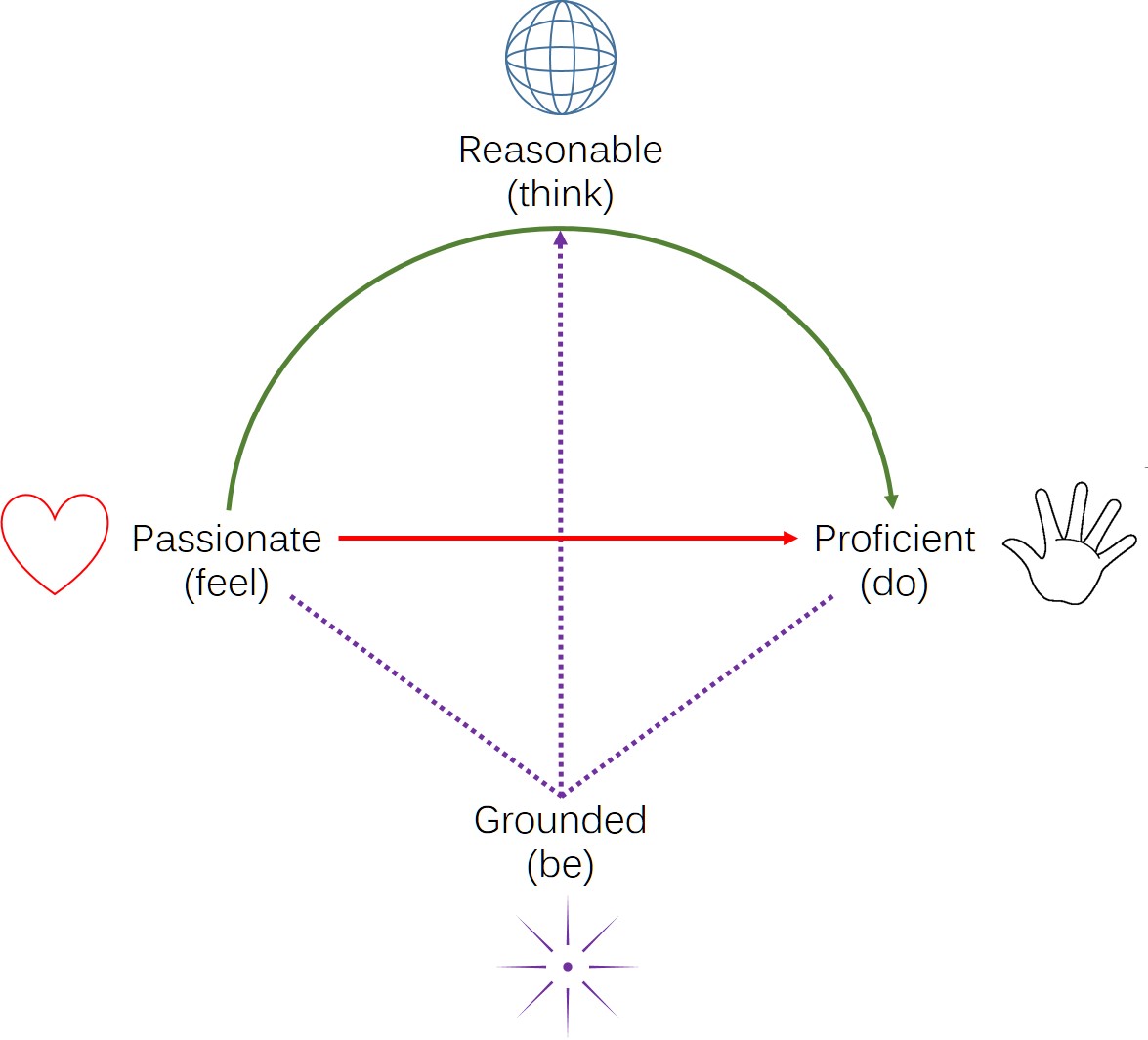
Because I prefer being reasonable to being passionate – though, again, there are things I’m very passionate about – I’m going to analyze this opposition into two distinct personality types. I’ll refer to my own type as “high road,” and because I don’t want to suggest that passionate folks take the low road, I’ll name their type “deep stream.”

In the diagram above you should notice that I have not placed cognition (thinking) directly opposite to emotion (feeling), as popular psychology tends to do. Instead, the expressive urgency with which strong emotion drives us to act out is counterbalanced by the freedom to choose, in what is known as volition. For its part, cognition stretches across the system, although it intersects with (or intervenes on) the high road sooner in the process leading to action than it does with the deep stream. This is the distinction I was getting at when I asked whether you tend to weigh options beforehand (by planning and foresight) or more often become aware only later of what options you had at the time (in hindsight and review).

All of us are oriented by life itself on the specific challenges prompting us to act or react to the situations in which we find ourselves. The evolutionary idea of “fitness” refers to the way in which an organism’s behavior adapts to the conditions of its environment in order to maximize its chances of survival and reproductive success. If we loosen up our definition of behavior to include every kind of action, from physical movement of the body to glandular changes in the secretion of hormones, then it’s easier to understand how the quality, direction, and ultimate success of life turns on behavior.

If action is the ultimate outcome, then motivation is what moves us to behave in the ways we do. As we consider our own experience, we are aware that our motivation in a given instance might follow the high road of premeditated reasons, or be pulled into the deep stream of compelling passions – again in some combination, but stronger on one side than the other. Although my language makes it seem like it’s one or the other, I think we can all agree that volitional goals and emotional drives are intermixed in the action-path of our daily behavior.

Cognition, or conscious thought, gets involved sooner in the process along the high road of volition. When we are weighing our options and trying to determine which is more aligned with our longer aim, thought is assuming a vantage point above and outside the specific allure of the individual options themselves. This objectivity is critically important when we’re taking the high road, since it enables us to detach emotionally from something and make a rational appraisal of its value relative to our larger plan or purpose. It certainly is the case that much of our progress as a species is due to this ability for taking an objective view on the challenges and opportunities life brings our way.

But we aren’t just bloodless cyborgs calculating the probability of favorable outcomes according to preprogrammed logical algorithms. Our emotions are what make life really interesting, if also painfully complicated at times. Conscious thought typically shows up farther downstream for passionate types. Being “in the flow” of inspiration and spontaneous feeling is a higher value than trying to be so terribly deliberate about it all. But cognition does show up, and when it does, the quality of experience is not about objectivity but engagement. Thought at this level is metaphorical, fluid, and shape-shifting. To be engaged in what’s going on enables us to respond intuitively and empathically to more subtle signals. Think again about our progress as a species, and reflect on how much of it is the product of creative imagination, artistic inspiration, and spontaneous feeling.

All of this is not intended to pit one side against the other or force you to choose between them. There’s too much at risk when we glorify one side of ourselves and condemn the other, especially when our pathological divisions play out in the social realm. We elevate the favored part of ourselves to divine status and project the disowned part into our enemy, where it can alienated, vilified, and attacked.

We need to be reasonable and passionate, if we have any hope of being happy and healthy. There are times when we will benefit from taking a step back and working through our options with the big picture in mind. But there are also times when we need to jump in and let the spontaneity of life pull us from our well-laid plans.

Wisdom is knowing when the time is right.

Remembering Jesus at Christmas

American Christianity

It’s funny how quickly people pick up the Christmas script this time of year, talking about how “Jesus is the reason for the season.” We scurry about from store to store, looking for just the right holiday decorations, cards, and gifts. We load up our credit cards and keep retailers in business for another year. This might be one of the two times this year that many of us go to church.

Did I say funny? I meant profoundly sad … and appalling. Just look how far off the path we have gotten from the original Jesus.

Despite the odd mix of ignorance and conviction that spins inside many of our churches Sunday after Sunday, we actually know quite a lot about the historical Jesus – about the actual individual who lived and died nearly 2000 years ago. We have to go behind the thick screen of mythology that began taking shape shortly after his death. Our New Testament, far from being an historical account of objective facts, is a complicated braid of distinct mythological traditions representing the diverse groups that grew out of the severed stump of his failed revolution.

The cross of Jesus is at once the symbol of his message and the sign of his violent end. As symbol it speaks of his compassionate solidarity with the poor as well as his courageous resistance to the political and religious regimes of his day. What is called “the gospel of Jesus” is not the orthodox doctrines about him, but the vision of a new world-order he professed and the ethic he both taught and demonstrated in his life.

Jesus condemned the social divisions of rich and poor, of “clean” and “unclean,” of insiders and outsiders. By refusing to walk the cattle path of moral mediocrity, which in every society provides the necessary justification for prejudice, bigotry, and defensive self-concern, he provoked a strong reaction in those whose state-appointed or god-ordained role was to uphold the current way of things.

What really agitated his detractors was his message and lifestyle of radical love. For Jesus, this type of love – not the sweet sentiment that commonly goes by the name – is so deep and far-reaching that it can neither be possessed nor measured out by preference. Such a love must extend so far as to include even our enemy: this call to unconditional forgiveness was ultimately what made it necessary to put Jesus away. He challenged his friends to go beyond the god of orthodoxy whose reluctant obligation to condemn sinners had effectively set a limit on forgiveness and granted divine endorsement of a shock-and-awe retribution when an enemy will not repent.

After his death, various followers committed themselves to living according his vision and example. For decades they were persecuted, driving some into hiding and others into outlying towns or deserts where they could cultivate his way of life. Another early Christian stream came under the charismatic leadership of a Jew named Saul (later Paul), who worked diligently to marry its Hebrew heritage to the Greek (gentile) mindset.

Using symbolism already present in Greek mystery religions – many of which were dedicated to a divine figure of the grain field and vineyard who died and was transmuted into the bread and wine enjoyed by devotees in a sacred meal  – Paul weaved together strands of Hebrew and Greek mythology. The product of his invention was “the Lord Jesus, who died and was raised.” His new body is the community of believers devoted to carrying his message and spirit into the world.

Some forms of early Christianity were oriented in this way, striving to realize the spirit of Jesus in their manner of life; while others, mostly groups still at the epicenter of Roman persecution, looked to a future day when the risen Jesus who had been temporarily taken up into heaven would return on the clouds with vindication for the oppressed and vengeance for their enemies.

After Paul came the Gospels, which gave more attention to developing the mythological backstory of Jesus. Here we find the symbols of a virgin birth, miraculous signs and wonders, an empty tomb, a vertical ascent of the risen Jesus into the sky with the promise of coming again, while continuing to be present where even two or three gather in his name, to the end of time. All of this mythology and its metaphysical framework conspired in a dramatic makeover of Jesus into one divinely ordained, filled with the Holy Spirit, the very (one and only) Son of God, and (in the coming centuries) Second Person of the Divine Trinity.

Along the way also, as the emerging Christendom sidled up to the State and eventually took over the reigns of political power, the essential message of Jesus concerning radical love and unconditional forgiveness was almost entirely forgotten. In its place Christian orthodoxy installed a worldview that divided heaven from earth, soul from body, man from woman, logic from feeling, and (once again) insiders from outsiders. In its soteriology (theory of salvation) orthodoxy once again elevated justice over compassion and glorified redemptive violence as god’s final solution to sin. The upshot of it all was to get the saved soul safely to heaven where true believers would receive their reward for faith and obedience while on earth.

With the shift from a feudal economy in the Middle Ages to a market economy in the dawn of modernity, Christianity established incumbency among the middle class. As capitalism took hold and spread, the ability to accumulate wealth and reinvest it for profit, or else spend it on the luxuries of a more leisurely lifestyle, inspired some to regard their good fortune as a sign of god’s favor. God’s desire is that we have all we need in abundance, and that we should be charitable to those in need. Rather than challenging the status quo and rattling the system that oppresses the poor, as Jesus had done, the Prosperity Gospel supports programs that only temporarily relieve the poor but leave the structures of inequity intact.

And so we come to American Christianity. Probably most true believers I’ve known – and I served churches as a professional pastor for nearly 20 years – care little about religious orthodoxy, or wouldn’t care if they knew even a little about it. They are familiar with that tired old rip about believing in Jesus as your personal Lord and savior, but their intellectual grasp on what that means is feeble indeed. For the most part they recite the doctrines and verses taught to them in Sunday School, go to church once in a while, and try to be good citizens of the American empire. One day Jesus will come again, or maybe they’ll depart this life and get to see him before he makes his descent.

This Christmas provides us an opportunity to look past the holiday glitz, behind the orthodoxy and beneath even the mythology of our Christian religion. We can, even now, remember Jesus. His vision for the world and our human future is just as relevant today, and his message is as urgently needed now as ever before.

The Promise of Consilience

Consilience Terms

One hundred seventy five years ago a term was coined as a name for the phenomenon in science where separate traditions of research and evidence “leap together” in a higher-order theory. The outstanding example of this phenomenon is the grand theory of natural evolution, which came together as an overarching explanation for the adaptation and advancement of life on our planet. Separate research traditions such as paleontology, molecular biology, genetics, and comparative anatomy seemed to resonate with a higher vibration that transcended and included their distinct lines of scientific inquiry.

As time went on, this same word was used to describe a hoped-for reconciliation of sort between the sciences which study facts and measurement, and the humanities which concern themselves with value and meaning. In a 1959 talk entitled “The Two Cultures” and presented to the Senate House in Cambridge, England, C.P. Snow laid out his grim prediction that the irreconcilable differences between these two domains would continue to undermine Western education.

The sociobiologist E.O. Wilson (1998) answered Snow’s prediction with his influential book Consilience: The Unity of Knowledge, wherein he argued that our quest to understand reality, construct meaning, and celebrate beauty are not mutually exclusive, but rather complementary in the mind’s great adventure for knowledge.

And there’s the word I want to reflect on further: Consilience.

In my professional environment of higher education there has been much talk in recent decades about “learning communities,” “integrative learning,” and “creative collaboration.” Educators and school administrators are aware of how the division of academic disciplines, departmental programs, and specialized services for students is shattering the vision of what we once knew as a college education. It’s becoming increasingly difficult to accomplish the traditional objective of education (referring to the art of “leading out” a student’s curiosity and ability to learn) in the face of a growing demand for straightforward instruction and passing performance on assessments.

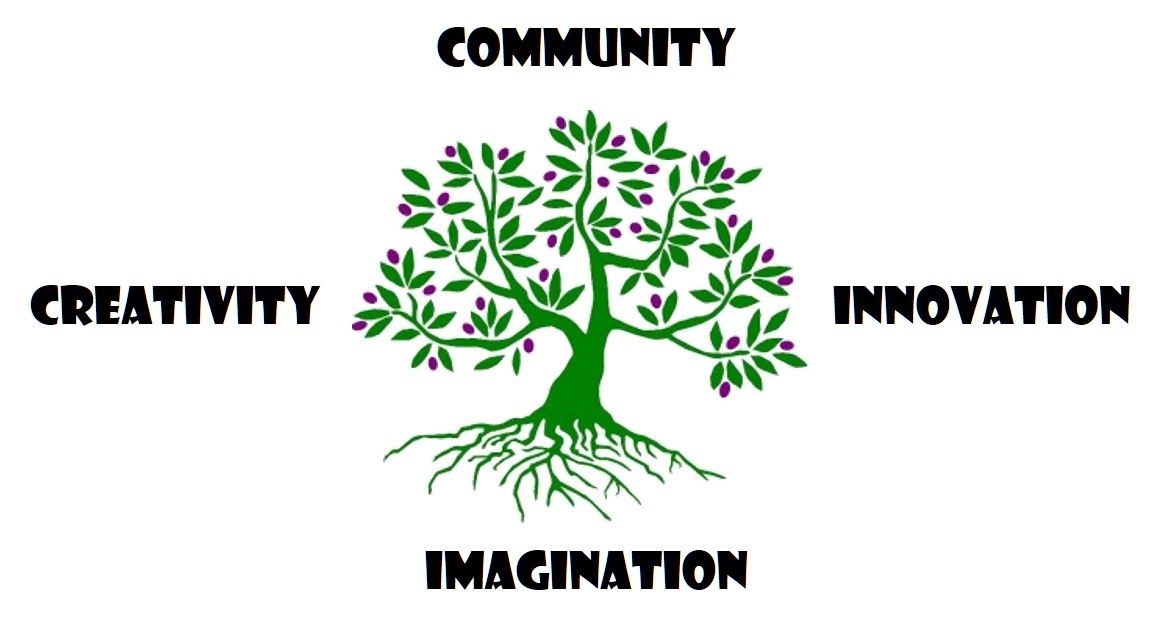
The question becomes How can we bring together these many pieces which are necessary to education, and go beyond mere instruction and standardized tests so that our schools can become centers of creative innovation, genuine community, and lifelong learning? My proposal takes a different approach to the attempts at throwing a lasso around all the loose pieces and building skywalks between departmental silos. What we need is a deep understanding of consilience and how to foster it in the learning alliance of teachers and students, in every classroom, boardroom, student program, and strategic initiative.

To help in this effort, I will introduce and operationalize six key terms which I see as critical to a deep understanding of, and commitment to, consilience in education.

System

First of all, we need to understand that everything exists in a system. Relationship and its connecting forces are the essence (the true being) of reality. Even though we might look around us and see many separate individual things – and regard ourselves as essentially separate from everything else – the best of science and spirituality has confirmed time and again that there really is no such thing as a separate individual. Nuclear forces, electromagnetism, molecular bonds, gravitation, sexual attraction, emotional affinity, social networks, local cultures, and complex ecosystems are really what we are working with (or against) all the time. Our very existence is their manifestation.

Because reality is a system – or better, a unified system (universe) of many smaller-scale systems – our health and success in anything depends on how conscious and intentional we are as agents of systems. Schools are systems situated in larger social systems, inside still larger cultural systems. And inside every school, on a daily basis, there are numerous “episodes” of interaction in systems known as classrooms. Successful education transpires in classrooms where teachers and students engage one another as agents of a shared (if only temporary) system.

Priming

Every system is characterized by some degree of coherence (discussed below), where the flow of energy and information is smooth and harmonious. But coherence doesn’t just happen; the conditions have to be right. Priming refers to what is done in order to maximize the chances that teachers and students will “jump together” (the literal meaning of consilience) into the higher experience of learning. This involves everything from classroom dialogue, to the use of teaching media, to the way a topic is introduced and presented, to both the nonverbal and spoken signs of mutual respect, to the physical space and furnishings of the classroom itself, to the internal state and personal investment of attention on the part of teacher and students alike.

When it comes down to it, successful education is not something that a teacher “does” to students, and it isn’t something that standardized assessments can measure. When the conditions are right, it happens. This distinguishes education from mere instruction, which reduces the classroom experience to nothing more than transmitting information and organizing data. Consilience in the classroom must be primed.

Synapse

System is a higher-level perspective on those connecting forces mentioned earlier. It all mysteriously works as one harmonious, rhythmic, and integral whole. But as I said, every system is really comprised of deeper systems, which means that a “consilient” classroom is actually a higher-order manifestation of the quality of engagement happening between teachers and students, and among the students themselves. In education the basic “units” are teachers and students, or more specifically, a teacher and each student. This relationship has the promise of becoming what I call an “effective learning alliance,” where both teacher and student are fully present and actively engaged in learning.

Synapse is a term borrowed from neuroscience and names the microscopic gap between nerve cells in the brain. Nerve cells (or neurons) conduct electrical impulses that travel down their axons, activating the release of molecules known as neurotransmitters. These neurotransmitters enter that gap and prompt the cell membrane of the next neuron to either open its gates to the flow of ions which regenerates the impulse of the pre-synaptic neuron, or keep them closed and let it effectively fizzle out. While the electrical impulse is “digital” (either ‘on’ or ‘off’), the amount and mixture of neurotransmitters in the synapse allow for “analog” (‘more’ or ‘less’) changes between cells and across the entire brain.

Current

What I earlier called the connecting forces in relationship are really another way of talking about the energy that flows throughout a system. In the context of consilient education we can see this as the current that flows from teacher to student, from student to teacher, and from student to student. Its different nuances of meaning – something present and ongoing, something that flows (air, water, electricity), something that moves and makes things happen (like currency in an economy), and something of relevant value – enrich our understanding of consilient education.

In this context we cannot force the current that connects individuals and elevates them into a higher experience of community. Community itself is not something that is arrived at by simply adding individuals together; it must be primed. We might speak of current as the life energy, mental force, creative intelligence, and flow of meaning that connects, inspires, and transforms those involved in learning. But in the end it remains only something we can open ourselves to and participate in, never cause to happen.

Arcing

Giving attention and care to priming the system and synapses of education serves this inherently unpredictable event of consilience. When the conditions are right, the current “jumps” across the synapse and engages both teacher and students in a genuinely self-transcending experience. We might think of a spark that jumps across the two poles of a spark plug, and consilience certainly can be regarded as a kind of illumination: a flash of insight, intuition, and greater understanding.

But let’s remember that the neurons in our brains do not actually pass electrical impulses directly to each other. The arc of communication between them isn’t a hard-wired bridge, but rather a potentiated space allowing for countless adjustments to be made to what would otherwise be an all-or-nothing prospect. Similarly, what I’m calling the arcing of consilience will always reflect the unique individualities of those involved. Just as slight changes in the amount and mixture of neurotransmitters will affect (excite or inhibit by degrees) the generation of an electrical impulse in the post-synaptic neuron, so too the current in a system like a classroom will be the dynamic product of unique individuals leaping together in the shared experience of learning.

All of that is to say that each individual, teacher and student, will jump (arc) into consilience as an individual, but everyone involved will go beyond their individual self. In consilient education, learners leap out of themselves and into a communal – or at least an interpersonal – experience. This event of self-transcendence elevates them beyond their present assumption of knowledge, and even beyond the teacher’s lesson plan, into a space of higher resonance.

Coherence

When the nerve cells are effectively communicating in circuits, and when neural circuits are resonating across the specialized networks of our brain, the entire organ will enter a dynamic state of coherence. When our brain as a neural system is coherent, our mood is stable, attention is steady, and our thoughts are clear. An inner composure supports deeper insight, artistic creativity, strategic thinking, and effective action – but also quiet contemplation. A coherent brain just works better. And as the owner of a coherent brain, you can do everything far better than when your brain is confused, irritable, or depressed.

Consilient educational systems such as classrooms demonstrate similar virtues: consilient partners (teachers and students) are calm and attentive, creatively engaged, insatiably curious, and actively involved in the learning opportunity. Oftentimes partners will be able to finish each other’s sentences, playing off each other’s “riffs” like members of a consilient jazz ensemble. They are caught up in the current of an ineffable experience, and when they come back down into their individual centers of consciousness, their minds are more open, their excitement for learning is stronger than ever, and their understanding of the topic of discussion has shifted to a new orientation.

Coherence is the optimal state of any system. It happens when the connecting forces between and among individuals move them to leap out of themselves and into the higher experience of community. By now it should be clear that this doesn’t happen accidentally, but neither can it be manufactured. We do our best to prepare for its emergence, and when it comes, we learn how to “go with the flow.”


Despite the fact that our present education system is failing students at higher rates than ever before, and failing them in both senses of the term, hope is not lost. For as long as human beings come together and open themselves to the transforming spirit of truth and love and beauty and peace, consilience will take them the rest of the way.

Inside Terrorism

IdeologyOne approach in dealing with terrorism is to try and knock it out with even greater force. If we can just exterminate the terrorists, we can get back to normal life. The problem with this approach is that it fundamentally misunderstands the nature of terrorism and the individuals who perpetrate its horrors. Our longer term solution will come as we are able to get inside terrorism and see where (and how) it takes hold of otherwise sane and decent human beings. Launching counter-terror campaigns can quickly make terrorists of ourselves.

As soon as we can acknowledge the ease in which we slip into and are taken up by ideologies that control our thoughts, feelings, and behavior, the closer we will be to a world free of terrorism. Once we understand the process as it takes hold of us, more creative, responsible, and wise solutions to the global problem of terrorism will become available. Ideology is a powerful spell that takes possession of our intelligence, radicalizes our attitudes, and compels us to act out of character with our better angels. How it does this is my topic here.

My diagram illustrates the process that produces a terrorist, but which also produces careless consumers who are currently devastating the biosphere of our planet. My challenge here is not to elucidate a particular type of terrorism (Muslim jihadism, rampant consumerism, or some other) but rather how any ideology makes us behave in ways that put living systems, and our own lives insofar as we depend on these systems, in jeopardy of extinction.

The process that slowly but inexorably leads us into the trance of ideology begins at a critical threshold where each of us manages the stress of life. By “stress” I am referring to anything in the environment – a challenge, crisis, difficulty, hazard or obstacle – that disrupts our equilibrium and must be addressed in the interest of regaining balance. Psychosomatic (mind-body) health is our capacity to identify the stressor, size it up, and work out a response that may involve some combination of overt action and mental adjustment. Success in any case will depend on an accurate appraisal of the stressor, along with a strategy for accepting it, overcoming it, reframing it, or perhaps exploiting it to our advantage.

What I’m calling a stressor (i.e., the cause of stress) is something “out there” in the external environment. The disturbance of our internal equilibrium is called distress. How we manage the threshold between stress and distress is a chief indicator of psychosomatic health. When the stress is more than we can handle, it provokes a “stress response” in the body that involves a syndrome of numerous physiological events, such as elevated heart rate and blood pressure, increased breathing rate and muscle tension, and the release of cortisol into the bloodstream which unlocks the energy stores in cells to mobilize stress-appropriate behavior. But of course, if the stress is already “more than we can handle,” something else must be done.

It is at this point that we try to separate ourselves from the internal distress we feel. An absent or ineffective behavioral response to stress leaves the distress unresolved, which further translates into chronic insecurity, flares of anxiety, growing agitation, and general unrest. When we were infants, our distress was pacified in the nurturing embrace of a caregiver. Our higher power helped us feel safe and supported, literally understood as he or she stood under us and calmed us down. When our higher power wasn’t immediately available, we probably found comfort in a transitional object like a blanket, teddy bear, or something to suck on – all of which can be called pacifiers, since they pacified us by alleviating our distress.

A pacifier is anything to which we attach ourselves for comfort. Since our first step was separating ourselves from the external stressor and fixating on how it was making us feel inside, pacifiers provided a way of reconnecting to the environment and recovering security. As adults we frequently seek security in membership, in joining groups and performing roles that help us feel accepted and valued. If our family of origin was not a strong community of support, or was maybe even dysfunctional and abusive, we might spend the rest of our lives looking for a partnership or society where we can belong. If we are desperate enough for security, we may be willing to sacrifice personal fulfillment and “sell our soul” for its sake.

Young people are especially vulnerable to the seduction of other misfits who have found identity in each other’s company. A distressed security-seeker finds consolation in knowing that others are similarly agitated, and joining a group pulls them into an identity contract where they take on obligations, are accepted as “one of us,” and may be given a special name or title. This identity contract anchors a worldview, and in turn energizes that worldview through the devotion and sacrifice it demands. For the insider such a construct of meaning offers refuge from “the rest of the world,” specifically from outsiders who lack understanding or sympathy.

Originally we needed an effective strategy for addressing the stressors of our environment and resolving the distress we felt internally. And ultimately this is what every ideology will drive us to, but now with an agenda that has divided reality into “us versus them.” If the pacifier is important enough to us, we will do anything to prevent it from being taken away. (Have you ever tried taking a security blanket from a toddler in distress?) Every attempt on the part of outsiders to destroy the society that gives our lives meaning only serves to strengthen that meaning as something to be defended at all cost.

When we have reached this point, terrorism as an ideology transcends the individuals possessed by it. Killing every terrorist will be impossible so long as the ideology of terrorism is alive, and only killing terrorists makes it stronger still. What needs to happen is for the ideology to get compromised inside its own logic. I propose that the “logic of terrorism” is a code made up of six elements.

1. Articulation of Grievance

Our distress is formulated into a complaint about the way things are.

2. Validation of Resentment

We need to feel that our distress (insecurity, anxiety, agitation, and unrest) is warranted.

3. Projection of Responsibility

Something in the external environment must be identified as the cause of our trouble.

4. Motivation of Vengeance

We are convinced that something must be done to retaliate and rectify the problem.

5. Justification of Violence

Any sacrifice, damage, or loss of life is interpreted as necessary to our cause.

6. Promise of Reward

A better life awaits, both on the other side of this conflict and in the world to come.

In our “war on terror” the rest of the world (we who are outsiders) have directed the major part of our aggression and criticism at the demonstration of this ideology, in acts of terrorism, but show little understanding of the soil where it takes root. In other words, we are trying to defeat terrorism in the theater of action when we should be disarming it farther down and far earlier in the process of its gestation.

I have argued that a terrorist ideology (as well as a consumerist ideology) is seeded by a grievance narrative, where a fundamental complaint about the way things are is articulated and takes command of our focus. This is what gets inside the minds of young people who are, even in normal development, searching for somewhere to belong that will pacify their insecurity, connect them to others who understand, and give them a meaningful outlook on reality.

But a grievance narrative will only take root in a personality that is unable to resolve internal distress. The narrative articulates what the young person only feels but can’t formulate into words. Once the grievance narrative takes hold, the individual feels supported, understood, and validated – and unwilling to give it up. With the individual’s full agreement, the grievance narrative anchors and drives all other elements of the ideology.

Rather than fighting violence with violence – or, if we must wage war on terror for the sake of our own security, then in addition to it – we would better help our young people learn how to manage that critical threshold between “out there” and “in here,” between self and world, where the stress of life can be met with composure, resilience, imagination, and responsibility. We will stop terrorism when we as parents, teachers, and other adult higher powers teach our children how to stay centered and just relax into being.

True enough, we cannot teach what we do not know. I guess the war on terror starts in me.

Family and the Human Future

Both Jesus of Nazareth and Sigmund Freud were Jews who employed the analogy of family systems in their critique of religion. Obviously they didn’t agree in the way they used the analogy, but each regarded it as perhaps our best model for appreciating the strategic role of theism in human experience.

In Freud’s theory, the infant and young child develops complicated relationships with its father and mother, which he formulated into the Oedipus and Electra complexes. Psycho-sexual obsessions and frustrations ultimately compel the (male) child to harbor resentment towards the father, who blocks erotic access to the mother. Freud proposed that the origins of religion are here, as a mutinous band of vengeful siblings succeeded in killing the father, dismembering and cannibalizing him, and then instituting a ritual of remembrance where his memory could be honored and their guilt alleviated.

That’s all very bizarre, and no scholar of religion gives Freud’s theory any serious respect. But his focus on the family as the formative system of early relationships that deeply shape a child’s self concept, attitude toward others, and general view of reality was right on. Mother and father do indeed operate as archetypes (first forms or prime models) in a youngster’s developing personality and orientation to life. The family system probably isn’t as sexually charged as Freud assumed, with its juvenile jealousy, sibling rivalry, and the secret conspiracy to overthrow father’s authority in order to take possession of mother. But it is a powerful incubator where much about our personal destiny – as well as the destiny of our species – is assisted to flourish or comes to ruin.Family SystemI have promoted the idea that the family system is our first experience of theism. Our higher powers – literally our taller powers – protected and provided for our needs during those critical years of dependency. In addition to serving as archetypes in our emerging sense of reality as provident (maybe threatening or indifferent, as the case may be), our parents legislated a morality of rules and expectations, enforced by a disciplinary system designed to conform our behavior to the way of life in our family.

If our higher powers were sufficiently conscious and deliberate, the rules of morality were also demonstrated in their conduct and demeanor. The “spirit” of law was thus embodied and modeled for us to imitate. Most importantly, the behavioral directives (i.e., the set of rules we were expected to obey) of our family’s moral code were translated into living values that we could see and feel. In this way, our moral development steadily shifted from obedience to aspiration, less about following rules and more about becoming a certain kind of person.

“Don’t take what isn’t yours” (a behavioral directive) merged into the aspirational ideal of respecting others and being kind (as living values). Our higher powers personified such living values, setting the example and encouraging us to do the same. Obviously no family is perfect, and no parent is perfectly consistent in practicing what is preached. But hopefully the match between moral command and personal example was close and consistent enough that we got the message.

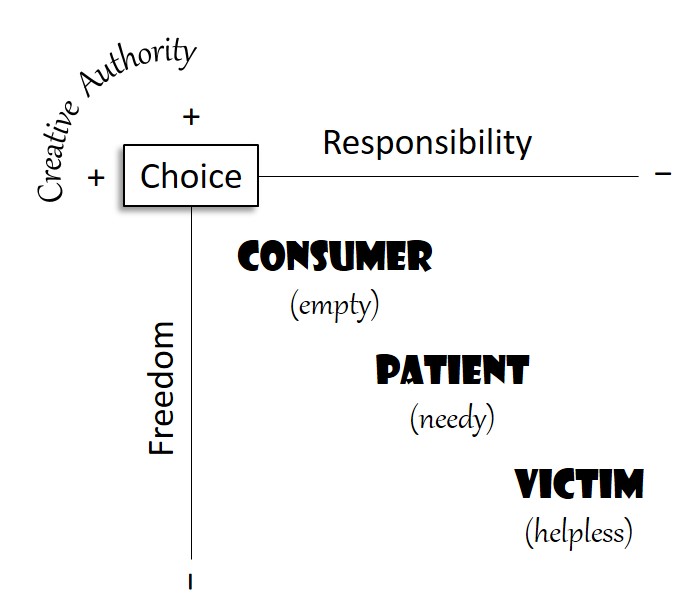
A healthy family system will progressively release control to the developing child. We were allowed to feed ourselves and dress ourselves; we were expected to carry our own weight and not rely so passively on our higher powers. By slowly forcing us into our own resourcefulness and self-control, our parents were preparing us for life as responsible adults. We should all agree that successfully reaching the point where we no longer depend on the provident supervision of our parents is a strong sign of maturity and creative authority.

As morality is concerned, the process of internalizing rules in the formation of conscience enabled us to make moral decisions without constant supervision. And as the living values embodied by our parents were gradually awakened in us and strengthened into enduring character traits, our need for their objective example diminished accordingly. Just as we were able to take responsible control of ourselves and thereby advance in our development to greater autonomy and freedom on the other side of the parent-child relationship, so too did our aspirational journey take us beyond a reliance on our higher powers in living a virtuous life.

That other Jew, Jesus of Nazareth, seems to have had a strong concept of god as father – not only for himself or even just his kinsmen, but of all human beings. For Jesus this metaphor, clearly anchored in the analogy of a family system, provided a way of honoring our human connection, one to another. If we are all children of the same parent, then the spirit that binds us together must be deeper than the differences that frequently push us apart. As we might hope for any family system, our conflicts and betrayals of trust can be resolved if we can just remember that we are essentially manifestations (or progeny) of one reality.

If reality is provident – and there’s no arguing the fact that the universe has conspired, intentionally or accidentally, to make the emergence of life, the ignition of consciousness, and this very observation possible – then we, as manifestations of this reality, have the potential (and once awakened, the responsibility) of extending this providence into our relationships and the greater community of life. “Be merciful as your father in heaven is merciful” is thus shown to be deeply equivalent to “love your neighbor as yourself.”

But Jesus went further still. If god’s love is infinite, then it must generously flow out to all beings without limit, without end, and completely independent of all conditions by which human beings segregate themselves. This love is so radical, in fact, that even forgiveness – extinguishing anger, releasing guilt, refusing vengeance, and working for reconciliation – is not a response to an enemy’s heartfelt repentance, but rather the creative initiative of loving-kindness that inspires it. Even if repentance never comes, love persists. If we are faithfully rooted in a provident reality, then love will flow through us unselfconsciously.

For Jesus, the application of this radical notion of unconditional forgiveness to the orthodox concept of god urged a revolution in religion. He demonstrated for others what such a love looks and feels like, and in so doing he “outperformed” the god of orthodoxy, who apparently was incapable of forgiving an unrepentant sinner. (We might have said “unwilling,” but the theology was clear that god is constrained by a reluctant obligation to condemn sinners.) In striving to live by the principle of boundless love and calling others to do the same, Jesus effectively stepped beyond god.

It’s not accurate to say that a child who has shifted more into an aspiration-morality is superior to, or better than, a child who is still oriented on obedience. On the other hand, an individual whose moral development ought to be opening in aspiration but who remains fixated in fear, shame, or guilt, obsessing over right and wrong, is very likely a prisoner of pathological theism – regardless of whether he or she ascribes to a formal religion.

And where, you ask, does this notion of “ought” come from? Who’s to say where human beings are evolving? My answer ultimately remains something of a profession of faith, not of belief but of my trusting intuition regarding what is deepest in us. We are social beings. We need relationships. We become conscious in the crucible of family systems. Hopefully we develop our own center of self-responsible authority and take our place in the world alongside others. Our evolutionary aim is to become creators of genuine community, provident higher powers on behalf of the young, the helpless, and those in need.

A worldwide community of liberty, justice, peace, and goodwill – on the other side of god.


My reader will no doubt have noticed an important discrepancy between the higher powers in family systems and the higher powers of theistic religion. The former are flesh-and-blood personalities, whereas the latter are literary figures of myth, art, and theology. Just because god isn’t an actual being in this sense doesn’t detract from his or her principal role in orienting devotees in reality and serving as the focal exemplar of virtue in their moral development. Whether literal or literary, however, these higher powers are ultimately something we need to progress beyond. Again, not atheism but post-theism. Just because you have taken up life after god doesn’t mean that god is no longer a valid and useful construct for others.


Curriculum Spiritus

Curriculum SpiritusIn a recent post I offered a perspective on religion which views it as a single transcultural evolutionary phenomenon, not merely this or that religious tradition but religion itself as the creative incubator of a higher spiritual wisdom. Already this sounds suspicious, given the fact that religions today (and for a while now) have been more conservative and reactionary as forces in society than genuinely progressive and spiritually avant-garde. That fact – especially today – cannot be denied.

But this goes to my more general argument concerning the validity of theism. If we can let go of our very modern reading of theism which reduces it to superstitious belief in the literal existence of god, and allow also that it provides a personified (metaphorical and literary) ideal of those virtues of character and community that humanity is evolving toward, then theism can be affirmed in its value – even as we contemplate our destiny on the other side of god (post-theism). When I defend the developmental necessity of religion, and more specifically of theism, I am not thereby automatically giving support to any historical version of it.

I chose four religions in particular: two strongly monotheistic (Judaism and Islam), one fully post-theistic (Buddhism), and one whose subsequent history abandoned the post-theistic vision of its “founder” (Christianity). Despite distortions and setbacks in each tradition, something of critical importance to the evolving wisdom of our species was clarified and offered up for us all. Part mystical realization and part ethical insight, the distinctive revelation – or, if my reader can’t hear that word without a supernatural backdrop coming to mind, then the distinct discovery – of each religion marked an advance in our human understanding of and progress into genuine community.

What’s more, the chronological sequence of the four traditions (Judaism, Buddhism, Christianity, and Islam) represents a progressive development, with each revelation building on and extending earlier ones. Whether these realizations and insights spread through time by cultural diffusion (migration, commerce, conquest) or by means of something more akin to Carl Jung’s “collective unconscious,” together they comprise what I propose to name the curriculum spiritus of our species.

Curriculum is defined as a course, literally a path or track; and spiritus is Latin for the vital breath that animates and enlivens. Together they refer to the path of human evolution, advancing by a progressive awakening to that distinct contribution of our species, genuine community – a conscious, creative, inclusive, and responsible way of life in the universe characterized by deep empathy. This choice of genuine community as our aim, over the popular notion of religion’s purpose as the successful rescue of the individual soul to everlasting beatitude in the next life, actually marks a recovery of its raison d’être (reason for being).

Again, I’m not suggesting that religions today really understand their greater cultural role as stewards of our collective spiritual wisdom, distracted as they frequently are by domestic squabbles, shrinking memberships, and the challenge of recapturing relevancy in the wake of secularism. Whether the four religions I feature here are healthy and true – in the sense of getting us closer and deeper into genuine community – is of secondary importance. The most important point is that the mystical realizations and ethical insights, in short, the spiritual wisdom gained over the millenniums concerning the virtues that conspire in the formation and longevity of genuine community, have already been uploaded. This wisdom is available to us now, regardless of our formal religious affiliation or lack of it.

So, let’s revisit this curriculum spiritus, which I am saying represents the collective wisdom of our species concerning the virtues that inform and sustain genuine community. My diagram takes the distinctive revelations in their linear-sequential order and rearranges them on a cross-axis to suggest some creative tensions inherent among them.

Covenant fidelity names the breakthrough realization where individuals in relationship consciously subordinate self-interest to the priority of their partnership together. Partners accept certain obligations and responsibilities to each other for the sake of strengthening community – the whole which is greater than the mere sum of its parts. Their need for belonging (fitting in) and recognition (standing out) is fulfilled, even as the call is honored to transcend ego in the interest of their shared life together. The general message is: Here’s what it takes to live together in peace and cooperation. Do your part and all will go well.

By placing universal compassion in opposition to covenant fidelity I am trying to bring out the creative tension between loyalty to the in-group and a wider sympathy that reaches to “outsiders” as well. Extending the horizon of fellowship to such an infinite degree as to include “all sentient beings” effectively removes the boundary separating insiders and outsiders, and forces us to reconsider the very notion of membership itself. If I am a middle-class, North American, white male human being, all of those distinctions except for the very last (being) can play into the trance that I am separate from the rest. Genuine community arises in the resonance of the “inter-being” (Thich Nhat Hahn) of all things, and when I live out of that deep realization of oneness, compassion flows.

We are all familiar with how such expansive compassion can suddenly collapse to exclude our enemy, referring not primarily to an outsider but to an insider who acts against us. When one partner betrays the other, or when one abuses the good faith of the other through theft, injury, or deception, a resentment and “righteous indignation” can build over time, such that no judicial process for setting things right can finally resolve. The one who has been hurt stores away this wrath until a moment, preferably aided by the element of surprise, when vengeance can be satisfied. But then, such retaliation only convinces the new victim that something must be done to get even – and back and forth it goes.

Unconditional forgiveness begins with the resolution not to repay evil for evil, but rather to “love your enemy.” The due process of justice can even be encouraged, given that, as Harold Kushner points out in his important book How Good Do We Have to Be? (1997), holding the wrong-doer accountable is how we acknowledge his or her humanity as an ethical being. Even with the wheels of Justice in operation, however, our willingness to release the desire for vengeance and regard our enemy with loving-kindness instead is at the heart of this virtue. And if your enemy doesn’t know – or worse, doesn’t even care that you are hurt and offended, then what? Let go, and love anyway. Genuine community must not only be bound by covenant fidelity and extraverted in universal compassion, but it also must inspire partners to honor and love each other without conditions attached.

The inevitable complications of living in community, and for community, make it tempting at times to surrender its ideal and settle for something easier to manage. Those in political authority, the economic class with the most market share, the greatest debt burden, usually those with the most to lose – such voices start to shift the moral discourse and social policy in favor of their own special interests. Something more realistic, but what inevitably turns out to be just another version of realpolitik privileging those in power, gets played out, inventing ways of justifying prejudice, neglect, oppression, and violence against the new outsiders.

What’s needed in this situation is absolute devotion to the ethical ideal of genuine community – to the covenant fidelity, universal compassion, and unconditional forgiveness that will keep us actively engaged in its pursuit. This virtue in the curriculum spiritus stands opposite the willingness to drop our moral right to retribution (i.e., forgiveness). And their tension – letting go of what is rightfully ours and simultaneously holding fast to an ideal we will not compromise on – is surely the place in this system of virtues where the entire project of genuine community most often comes to frustration.

What if we determined never, in any circumstance, to relax our devotion to the work of genuine community? What if our devotion, in this sense, was absolute – pure, unmixed, independent of ego ambitions, urgency, or expedience? What if, above all, we were committed to a life together, reaching out in love and letting go of anger, giving ourselves continually to this work and refusing to settle for anything less?

The world would be a very different place, would it not?

Holding Up the Mirror

BES Big Picture

Okay, so it’s time for another check-in. We need to do this every so often, just to be sure that my various thought streams are staying congruent with the big picture. Too easily, analysis can chase down the pieces and forget that all these finer distinctions are elements and features of a greater whole. We become widget specialists and lose our appreciation (if we ever had it) of how all of it seamlessly fits and flows together.

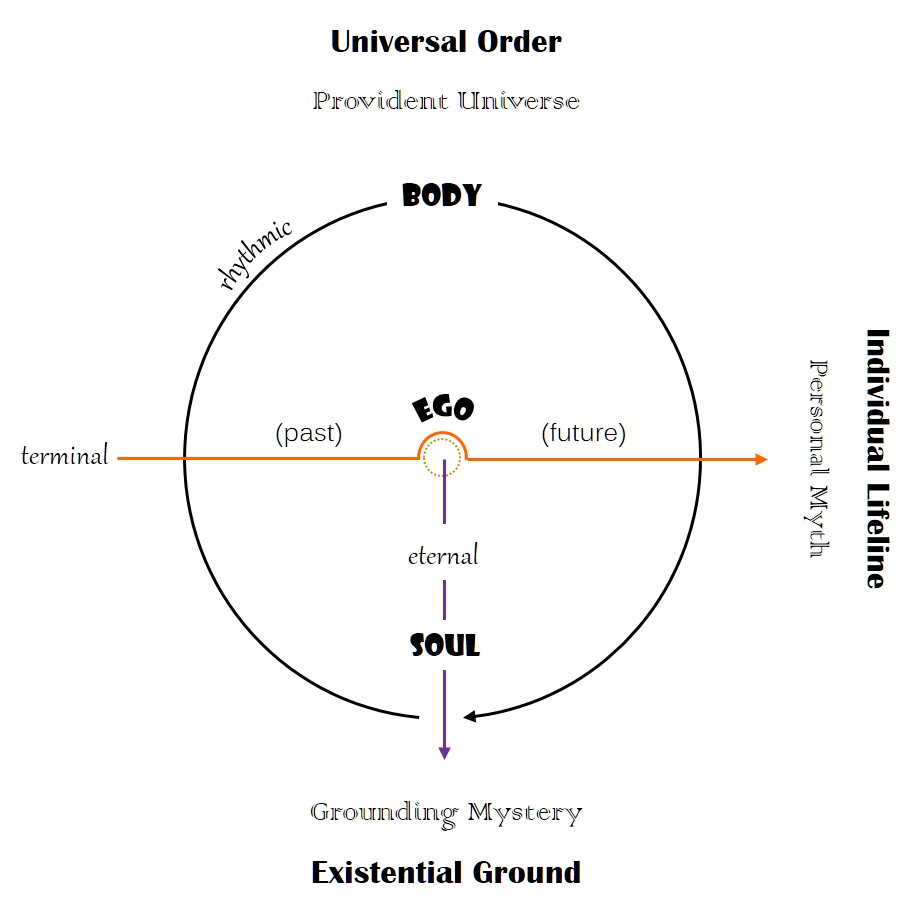
I’ll take you on a tour through the diagram above, first moving vertically up the center axis and then left-to-right. If you’ve been keeping up with my posts, the symbols and terms should be familiar, though I’ll do my best to give concise summaries where I can.

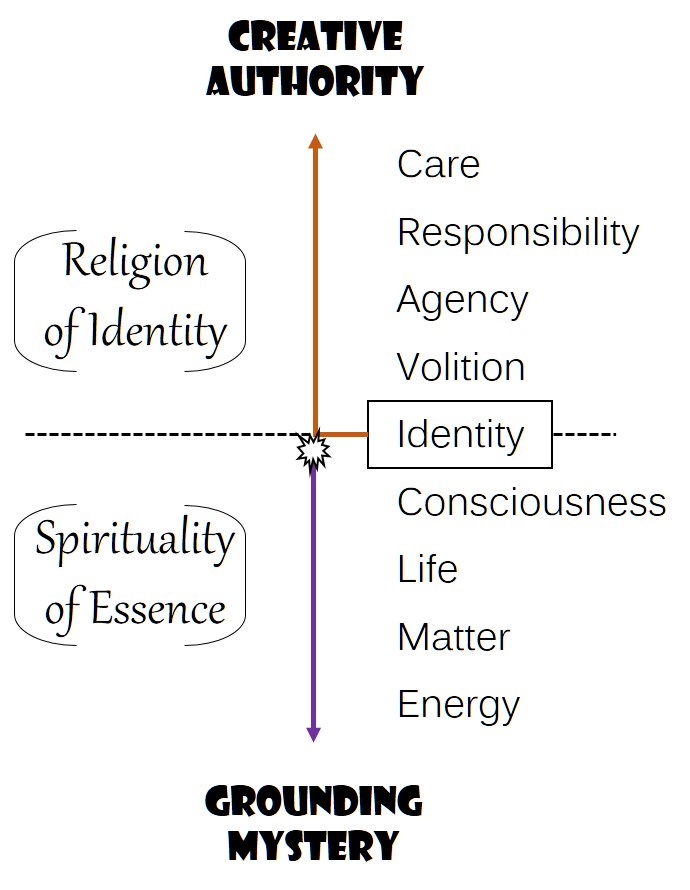
Arranged along the center axis are three mental locations where human consciousness engages reality: in the body (sensory-physical realm), the ego (socio-moral realm), and the soul (mystical-intuitive realm). Notice the correlations along each side of the three mental locations, the way consciousness turns inward on the left side and outward on the right. “Inward” and “outward” take on very different connotations, however, depending on the location being considered. Internal, subjective, and existential (left side), or external, objective, and transcendent (right side) are not synonyms but fundamentally distinct orientations of consciousness.

This isn’t really a controversial idea. Just take a moment to notice how the physical environment around you now is accessible to your physical senses, but how the assigned values and meanings that incorporate parts of the environment into your personal world are not. Stepping up one more level to the mental location of soul, you should be able to appreciate the extent in which the transcendent unity of existence is not something you can detect with your senses, and neither is it a mere construct of meaning contained within the horizons of your personal world.

Again, notice how the physical organs and urgencies in your body stand in a distinct dimension from the beliefs and prejudices carried in your ego. And then contemplate the ground of your existence as it opens within you and rises in the quiet presence of being-itself. There are no organs or beliefs inside the soul, only an expansive clearing of present awareness and inner peace. Your existential ground and the transcendent unity of existence are not somewhere inside or outside of you, but instead are the mystical-intuitive dimension of reality as accessed through the mental location of soul.

Then why are we accustomed to speaking of body and soul as “mine,” and as separable from each other? Why do I live “in a body” and “have a soul”? Come to think of it, who is this “I” that presumes ownership of a body and identification with a soul?

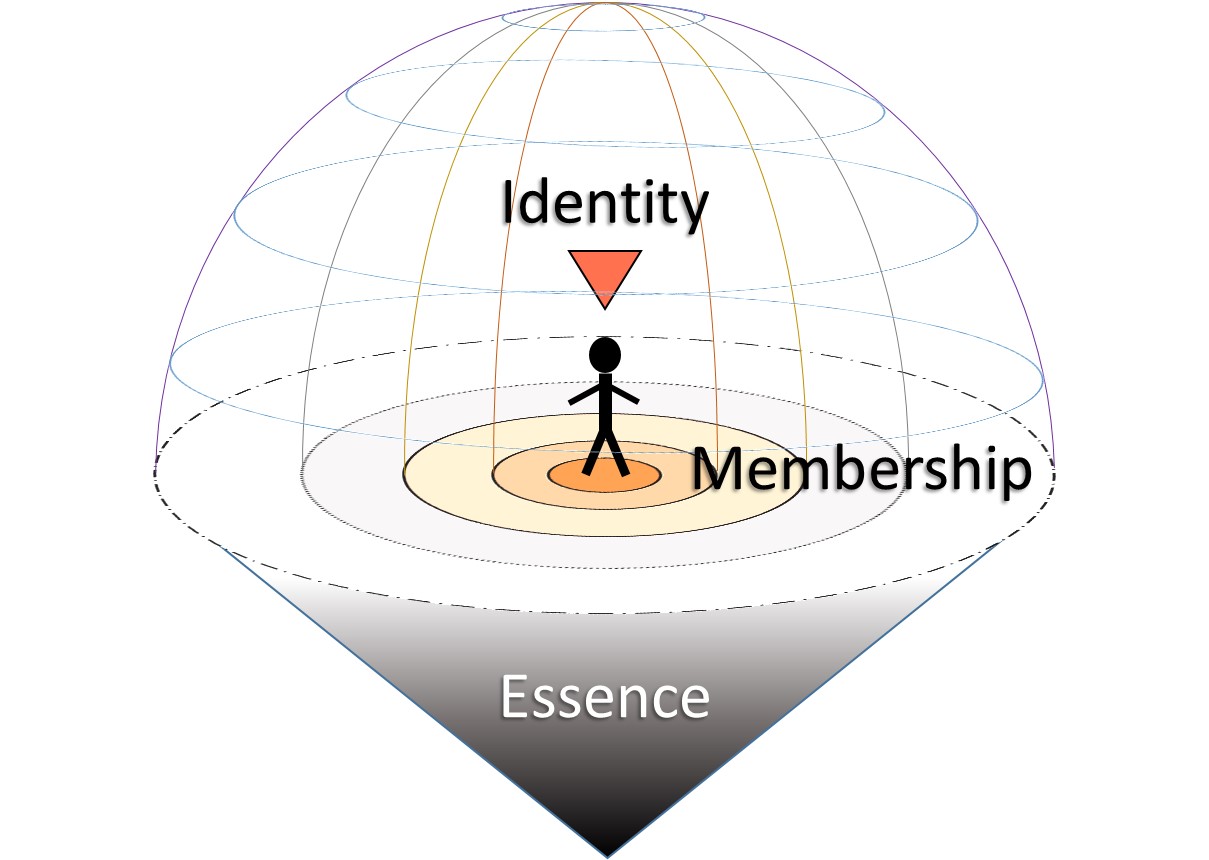
The answer brings us to the center of my diagram, to that mental location of consciousness known as ego. While body and soul are considered primary to what you are as a human being, your identity is something that was (and still is) constructed in the interpersonal context of society. It’s helpful to distinguish between essence (what you are in your being) and identity (who you are in the world). Whereas essence (body/soul) is what makes you human, identity (ego) is how you define yourself as a person. This notion of ego as a social construct wonderfully complicates the human adventure, since every individual ego is a product to some extent of the society that shapes it.

I’ll just give a summary account of the process as it relates to the left-to-right horizontal axis of my diagram. Your identity – and I’m referring not just to the roles you play in the world, but to yourself as a performer of roles – got started in the awareness that your tribe expected certain things of you. Earliest on, these expectations were focused around the need to take control of bodily impulses, and not merely to gratify them spontaneously whenever the urge arose. The morality of your tribe at this stage was simple and binary: Do this, and Don’t do that. Your options were clear between good and bad, right and wrong, yes and no.

The challenge of membership was not settled by the mere fact of your birth or adoption into a family. To be “one of us” and a good boy or girl, some mechanism of restraint was imposed on the urgencies of the body, and in the pause or delay opened up by that restraint, a quantum of consciousness was harnessed and steadily shaped into Captain Ego. Since you were dependent on your provident taller powers for protection, nourishment, and support, this discipline of repression – literally pressing those spontaneous impulses back into the body (or what is also called “holding it”) – eventually produced the illusion of an ego as separate from the body, as well as from the rest of reality.

As we now swing over to the left side of my diagram, we see how your developing ego was conditioned from the very beginning by a need for security, represented by a triangle. I’ve positioned the triangle on an arc stretching between the internal organism of body and the existential ground of soul, making the point that your need for security has both animal and spiritual implications. Already from the time in your mother’s womb, the body’s nervous system was fulfilling one of its primary functions, which is to match your body’s internal state to the perceived conditions of its external environment. (The obvious evolutionary purpose in this rapport-building is to initiate adjustments that will maximize your survival chances.)

Though the uterine conditions of your mother’s womb may have been optimal, the situation changed dramatically once you were delivered (or expelled, depending on the myth) into the social womb of a family. There, whatever distress your nervous system took along with it was either mitigated or magnified by the relative health and attentiveness of your family system. Security, then, is the sense that reality is supportive, provident, and sufficient to your needs. It has both an animal aspect, in the relative composure of your nervous system, as well as a spiritual aspect, to the degree that you are able to rest in the grounding mystery of existence.

And wouldn’t you know it, but nobody gets through this gauntlet without some insecurity – not even you. This brings us back to the center of my diagram, to the circle that surrounds ego, a shape representing attachment. This is how you compensated for whatever lack of security you may have felt: you reached out and latched on to whatever could help calm you down. Not surprisingly, the greater your insecurity, the more desperately you gripped down and held on. Along with this behavioral holding-on came emotional identification with the objects of your attachment, as well as increasingly unrealistic expectations (and expressed demands) that your objects never let you down.

Perhaps it was a combination of this imperial claim on reality along with a vigorous dis-identification with the body, that first inspired ego to impersonate the soul and insist on its own immortality. We should note that it likely wasn’t some keen insight into the evergreen nature of soul but a consequence of its own opposition to the mortal body, that motivated ego to regard personal identity as something that must live forever. Personal immortality is quite a late development in religion, but once it took hold as a doctrine, religion (in particular, theism) became increasingly preoccupied with ego’s escape plan.

But let’s stay in the world a bit longer as we move one more step to the right in my diagram, to a square which represents the ego’s need for meaning. Actually “world” and “meaning” are deeply synonymous, since your world is a personal system of meaning that you are busy constructing and maintaining in cooperation with your tribe. I have placed the square, with its four sides for boxing up reality, on an arc stretching between body’s external environment and soul’s transcendent unity of existence. This makes the point that your world is neither a simple arrangement of empirical facts, nor an infinite horizon containing all of reality. It is a very selective, biased, and egocentric work-in-progress.

Indeed, stronger attachment to the objects (other people, things, ideas, events) that compensate for your insecurity requires a system of meaning (personal world) where all of it makes perfect sense. A way of stating the consistency across the horizontal axis we’ve been considering is this:

A primary function of your world is to justify and protect the attachments which in turn pacify your deeper insecurity.

Ego’s subjective self and objective world are thus the inside and outside of “me.” But in truth both are constructions, two sides to a complicated role play, a lifelong project of make-believe. I’m using the word “truth” here as a reference to the way things really are, to the reality beneath and beyond the illusion of meaning, which may shine through or break apart your tidy system in moments of epiphany or apocalypse. That famous line from the film A Few Good Men (1992) – “You can’t handle the truth!” – applies to most of us, most of the time.

So what’s the upshot of all this? Why hold up the mirror this way and a take an honest look at yourself? Very simply – and this is the ultimate aim of what is called “awakening” – to help you realize what you’re up to.

As the morning sun fills your curtains, perhaps this will be the first day of the rest of your life.

The Progress of Wisdom

I write this on the day after the city of Paris suffered a coordination of terrorist attacks on its citizens. Just this morning we learned that ISIS (a radical sect of Islam that seeks to establish a theocratic state) has claimed responsibility for the slaughter of 129 innocent lives (and still counting). It’s tempting to jump on the anti-Islam wagon and talk about how dangerous this religion is to our civilized security and to the future of free democracy and human rights. How it should be pushed into extinction as quickly as possible – along with all religion while we’re at it.

But I won’t. Instead I’m going to offer a very different perspective on this religion and its place in what I’ll call the progress of wisdom on our planet. We gave our species the name Homo sapiens sapiens (“very wise person”) prematurely and perhaps in denial of the catastrophic foolishness of which we are capable. Or it might have been prophetic of the direction we are evolving, which is increasingly toward a more rational, cooperative, and ethically-minded mode of being. I realize that the atrocities in Paris argue against such an optimistic view, but I should emphasize that I am not making a claim for having arrived, only that we have been evolving in this direction over the millenniums of our ascent as a species.

My second point is a bit harder to defend, which is that religion has been crucial to our advances in wisdom. Today the voice and behavior of religion tend to reinforce the growing opinion that it is a regressive force in modern culture, closing down the mind, perpetuating superstition, and putting up walls where we should be building bridges. And I agree: religion itself is frequently the most strident opponent of spiritual awakening, reluctant to validate and quick to condemn our need to transcend ritual, creed, and orthodoxy for the sake of a higher realization. But as I’ve said before, the regression and corruption of a religion (or even all religions) doesn’t automatically mean that religion itself should be rejected out of hand.

As a system for “linking back” (Latin religare) the individual to his or her community, the community to its history, its history to the cosmos, and all of it to the grounding mystery of being itself, religion has been the glue in human culture. And in its guiding fictions, known as myths, religion has provided for the contemplation of our destiny, our obligations to one another, and of our own evolving nature. Its revelations have come in stages, at precisely the times we were ready to discover more of ourselves and actualize a higher wisdom.

Once an insight was gained or a principle introduced, its transforming power didn’t always, if ever, meet with unanimous acceptance. This is where it is helpful to distinguish between the historical religions (including the history of religion) and the stream of higher wisdom that has been progressing over the millenniums. Think of it this way: as religions evolved, new ethical insights and mystical realizations were “uploaded” to a collective depository of higher consciousness that transcends each and all local cultures. Every time these insights and realizations are contemplated, taught, shared, and put into practice, that wisdom is “downloaded.” The religions exist in local time and get closer or fall farther away from these truths depending on the political intrigues, moral campaigns, or economic hardships that happen to be tying up energy. The stream of wisdom, however, is timeless.Stream of WisdomWhat is the guiding ideal to which this stream of collective spiritual wisdom leads? As I survey four of the major world religions and consider the unique “upload” of wisdom represented in each one, the answer to this question becomes obvious. Humanity is evolving in the direction of genuine community – conscious, creative, vibrant, and inclusive. The essential principles and conditions that make such community possible have already been uploaded to the stream of wisdom. It just happens that downloading activity has fallen off sharply of late, which means we are not accessing this wisdom and putting it into practice.

In choosing these four religions I am not “rejecting” others. From my study of religion, which includes a fairly exhaustive survey of the major traditions, I find that these four in particular – Judaism, Buddhism, Christianity, and Islam – were both originators and early outspoken witnesses of the “insights and realizations” that promote genuine community. Other religions may sound similar bells, but these voices were the first and clearest in articulating them. Let’s take them in chronological order, as suggested in the above diagram.

Covenant Fidelity

Judaism discovered and introduced the first principle of genuine community, which offered a way through the impasse caused when emotion and self-interest drive human relationships. Each individual finds pleasure in the other’s company so long as they can get along and stay in agreement. But when interests diverge and their goals fall out of alignment, or when one betrays the other or causes injury – then what? The rule of nature would likely motivate a separation, but not until the offense is redressed. And the more painful, the better.

The ethical insight of covenant fidelity places that relationship inside a system of constraints that are meant to “overrule” the impulses of emotional self-interest and retaliation. A covenant is a compromise (literally a “shared promise”) where individuals commit themselves to the health and longevity of their relationship, instead of being driven by what they get or hope to get out of each other. When disagreement, injury, or betrayal occur, the covenant holds them to their promise and exhorts their best efforts in working things out. As an ultimate aim of covenant fidelity, genuine community becomes the context for reconciliation.

It’s important to see that in Judaism’s concept of covenant fidelity, the objective is not to let wrongdoers get away with it, but neither is it the best thing to let the fur fly until the victim is fully satisfied. The rules of covenant say things like, “Love your neighbor as yourself” and “An eye for an eye, a tooth for a tooth,” where a punishment must fit the crime in the interest of repairing broken or strained relationships. In the normal dynamics of any partnership individuals will fall in and out of affection for each other, but faithfulness to the covenant of their relationship will keep them both oriented on a greater good.

Universal Compassion

Siddhartha Gautama took the Hindu doctrine of Brahman as the One Being in myriad manifestations and followed it all the way to its logical conclusion: If all things are manifestations of One Thing, then all things must also be connected by a sympathetic energy. For the future Buddha the implications of this mystical insight were revolutionary and far-reaching. The outcasts of his society were no less deserving of happiness than those in the highest caste, and no one is exempt from the human condition, which he compared to the chronic pain (dukha) caused by a dislocated joint.

We are all off-center and out of alignment with our proper being. Insecurities drive us to attachments that inevitably magnify suffering as they fall short of our expectations, dissolve under their own impermanence, or change without our consent. In desperation we grip down all the more, only to make our problem much worse. All of our defenses and strategies, our hopes and convictions, end up pushing us deeper into suffering. What we need is to see – really see – that our suffering is self-induced, and that all of our aggressive self-promotion is counterproductive. Making it all about “me” makes us incapable of seeing beyond ourselves to the shining truth of existence.

This understanding of ourselves, where we can acknowledge the insecurity beneath the ignorance that in turn drives the damaging ways we treat each other, can ignite in us the power of compassion – not just for ourselves but for all people. With this ethical vision of universal compassion, rooted in the mystical realization of the interconnectedness of all things, our evolutionary path to genuine community made a decisive advance.

Unconditional Forgiveness

With Christianity – or I should say with Jesus, since the Christian religion was unable to institutionalize the heart of his teaching – came the invitation to accomplish something that would neutralize, or better reverse, that one inviolable moral imperative which holds every tribe together when all else fails: hostility for the out-group. Of course, the boundary separating insider and outsider can be drawn arbitrarily as impulse dictates, which means that what we’re really talking about is how we regard and respond to “the enemy.”

Obviously our enemy doesn’t have to be over the sea or outside our borders. The ones that cause us the most distress and provoke our greatest hostility are the enemies who were formerly our friends, people we trusted but who betrayed our trust, even those we had let into our deepest confidence and most private concerns. Looking around, Jesus observed how much unrest in human relationships is due to a perceived retributive imbalance between individuals and groups. One side has “gotten away” with something, has taken more than his or her share, or caused damage that must be repaired before things can be right again. The trading back and forth of this “retributive reflex” – each side getting even with the other but perpetually throwing off the balance in the other’s mind – is what locks us in never-ending border wars.

The orthodoxy of Jesus’ day had set limits to how many times one should be obliged to forgive an offender. According to rabbinical tradition a remorseful and repenting offender ought to be forgiven as many as three times – more than that puts the guilty party’s sincerity in question. Behind this limit-setting was the conviction that an unrepentant sinner doesn’t deserve the gift of forgiveness. In fact, an unrepentant sinner (as well as the perpetually insincere penitent) deserves to be punished. Instead, Jesus counseled the radical response of unconditional forgiveness. Effectively he told his disciples to just let go and stop counting; love anyway. When the retributive reflex in our hearts is extinguished, the world around us will change.

Absolute Devotion

Now we come to the contribution of Islam. As his generation was languishing amid a stifling pluralism and moral laxity, Muhammad realized that what they were missing was a commitment to something that transcended all the temptations and distractions in the foreground. This supreme reality was the will of Allah, and to submit oneself to the will of Allah would ignite a passion and purpose that no worldly power can overcome. The Muslim’s first task, then, is to vanquish the evils of greed, bigotry, and hypocrisy in his heart, by the systematic and relentless discipline of jihad.

By “absolute” devotion we are referring to an ongoing act of full surrender to Allah’s will, not calibrated on the basis of our circumstances or conditional upon our internal motivation. Absolute literally means perfect, not mixed or adulterated, free from restriction or limitation. Allah’s will is not interpreted through anything, whether it be a holy book or even The Prophet himself. It must be desired, grasped, internalized, assimilated, and realized in the world without compromise. There is an evident danger in this idea of an absolute will, and the Muslim doctrine of the Qur’an as the inerrant word of Allah that must simply be read and obeyed has made the religion especially attractive to extremists who come to regard their own wills as beyond question or debate.

Throughout its history Islam has shown vulnerability to take-over by radical ideologies. Whoever steps into power and assumes an air of authority has been able to exploit the absolute devotion of true believers. The violence in Paris is another example of how the internal struggle of jihad can get perverted and projected outward onto “the evil other” in a kind of religious insanity.

But if we can see this principle of absolute devotion in the sequence of revelations, as whole-hearted and unwavering commitment to something beyond the individual ego, a different picture emerges. I propose that each of the four principles builds on the others, extending and deepening our understanding of what genuine community entails.

Genuine community =

an abiding faithfulness to the health and longevity of relationship (covenant fidelity)

+ a profound appreciation of our shared suffering and connectedness (universal compassion)

+ a decision to release our grievances and treat our enemy with kindness (unconditional forgiveness)

+ a relentless pursuit of its realization on earth (absolute devotion)

The stream of wisdom is the property of no single religion or culture; it is ours collectively as a species. Homo sapiens sapiens.

Commence with the download!