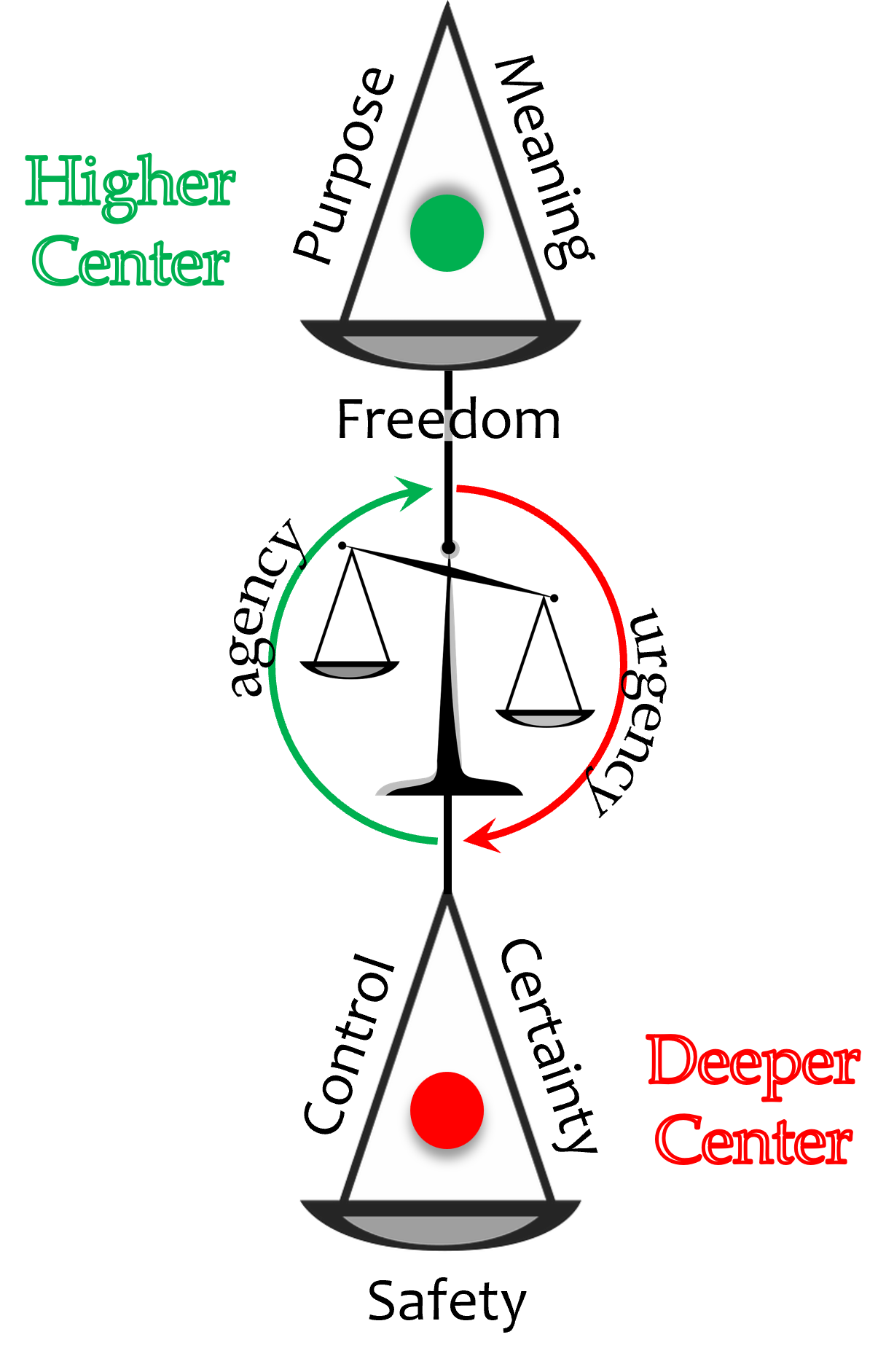
Individuals of the age 17-24 are at a time in their development when the general task of their Hero’s Journey turns on the challenge of charting a path into a future of freedom, purpose, and meaning.
Through childhood they had lived under a regime of taller powers (parents, teachers, coaches) who guided their steps and managed the world.
If all went reasonably well, the high school graduate is ready to begin taking responsibility for their own direction in life.
Many college students in that age range who come to see me, however, are not ready. Not only do they lack a view on the world sufficiently broad and far-sighted to provide them with an interesting array of relevant options to consider; they aren’t emotionally ready.
From neurocognitive science we know it’s not until our mid-twenties that the executive capacities of the prefrontal cortex come fully online, giving us an ability to see a bigger picture and longer view on life. Of course, I won’t hold that against my 17-to-24-year-old college student. It’s just bad counseling to hold a person accountable for something that lies outside their present capacity for doing anything about it.
As I assist students with the information, resources, and tools that can help them take responsibility and make confident choices regarding their college-to-career path, a significant percentage of them appear frozen in the headlights.
Early on, I would go back over the best methods for using the tools, reminding the student that I am not a career advisor – here to tell them what I think they should do with their life. Instead, I am a vocational counselor with the charge of making sure students are connecting to resources that can help them clarify a path of purpose, both through college and into their life outside and after college.
Even after such re-sets, though, a large number of students still seemed stuck and bewildered. How can they find a path that’s best for them? Will they be able to succeed in the program and make it to graduation? What if doesn’t work out? What if they don’t have what it takes?
What if.
Drawing on my earlier career experience in spiritual direction, community counseling, and life coaching, I eventually came to better understand the forces that often lock us up and hold us back as humans from the positive change, progress, and fulfillment we may say we want. This led to the formulation of what I call The Two Centers.
Importantly, we all have these two centers, each its own locus of needs and concerns that are essential to human health, happiness, and wellbeing.
Distinguished as our “deeper” and “higher” centers, the process of growing up and becoming a self-responsible adult in the world involves an ascent from deeper to higher needs. As we make this developmental ascent in maturity, we are not leaving the needs and concerns of our deeper center behind, but rather incorporating and transcending (going beyond) them as our higher center is activated.
A schematic of the Two Centers and their associated needs is illustrated above. In this post, we will follow the map along this same ascending path.
Early in life, a deeper center focuses our attention on the concerns of safety (physical and emotional), certainty (knowing and predicting), and control (calming ourselves and navigating a situation). These needs are connected to primal urgencies of survival – staying alive and finding what we need to grow and thrive. When these needs are adequately met, the child develops a secure base of faith (i.e., basic trust), self-confidence, and openness to the world.
When neglected or compromised, however, the consequence can be a nervous system set on edge, with a tendency to spiral into the urgency of disordered internal states.
This is where many college students are stuck – that “frozen in the headlights” phenomenon mentioned earlier. The urgency of disordered internal states – anxiety being the most common – pulls the student’s attention into their nervous distress and keeps them from contemplating the possibilities or considering their options.
When that happens, my next move is not to step in as their mental health therapist. Generally speaking, I will always choose empowerment over intervention. I believe every student has what it takes to succeed, and often it’s a matter of helping the student see this potential and begin believing in themselves.
We talk about the subjects and activities the student finds interesting, as I gently but firmly guide them away from the BOX they feel trapped inside and more toward a PATH that is opening up before them. (See my recent post Words and Reality for more on the power of these life metaphors.) My goal is to slowly activate the student’s sense of agency by reflecting with intention on the needs and concerns of their higher center: freedom (flexibility and choice), purpose (desire and direction), and meaning (value and significance).
This is where a student can reach a higher vantage point for seeing the bigger picture and longer view of their life.
Vocational clarity begins to emerge as they engage the challenge of taking greater responsibility in their actions and decisions.
The larger life skill we can all benefit from is learning how to manage a balance between our lower and higher centers. Again, we can’t neglect our deeper needs for safety, certainty, and control, which are wired into the biology of our animal nature. Our higher needs, on the other side of this balance, are powerful concerns that we ignore or suppress to the detriment of our health, happiness, and wellbeing.
From my own personal life and counseling experience I know that many of us struggle to rise above the urgency of anxiety, worry, self-doubt, frustrated desire, nervous exhaustion, and depression. I’m pretty sure that the way beyond our suffering is not (or not only) a matter of treating these symptoms.
Instead (or in addition), we need to step into our agency and choose a path of purpose that makes life meaningful.

