Some of us are obsessed with our health, others with success, and most are actively chasing happiness. But who among us is intentionally cultivating wellbeing? Or is that term just a synonym for one of the others – maybe the fusion of all three?
Maybe we’re stuck in confusion.
If not confused, then we might actually be fragmented – not mixed up but pulled to pieces, dismembered, in all the different directions that postmodern life demands. Looking around ourselves at the current state of society, it sure seems that division is a driving factor. West against East, Red against Blue, White against Black, rich against poor, “natives” against immigrants.
When these divisions become rigid and walled-off from each other, conflict and calamity are sure to follow. It’s only a matter of time.
Before we get to work building gates in our walls or breaking them down, however, Wisdom would have us first heal the divisions within ourselves as persons.
Healing divisions is not a matter of opening borders or building bridges that might facilitate the blending or smoothing-away of differences. A lasting solution will not involve snipping the tension generated between the opposite poles, or eliminating the poles themselves. Instead, we have to learn how to cultivate harmony by balancing the tension and seeking wholeness.
The set of insights, practices, and disciplines that enable us to find and manage this balance are the secret to human wellbeing. Beyond health, success, and even happiness, wellbeing refers to the condition of being well, or, deeper into the etymology of that word, being whole.
But what does it mean to be whole?
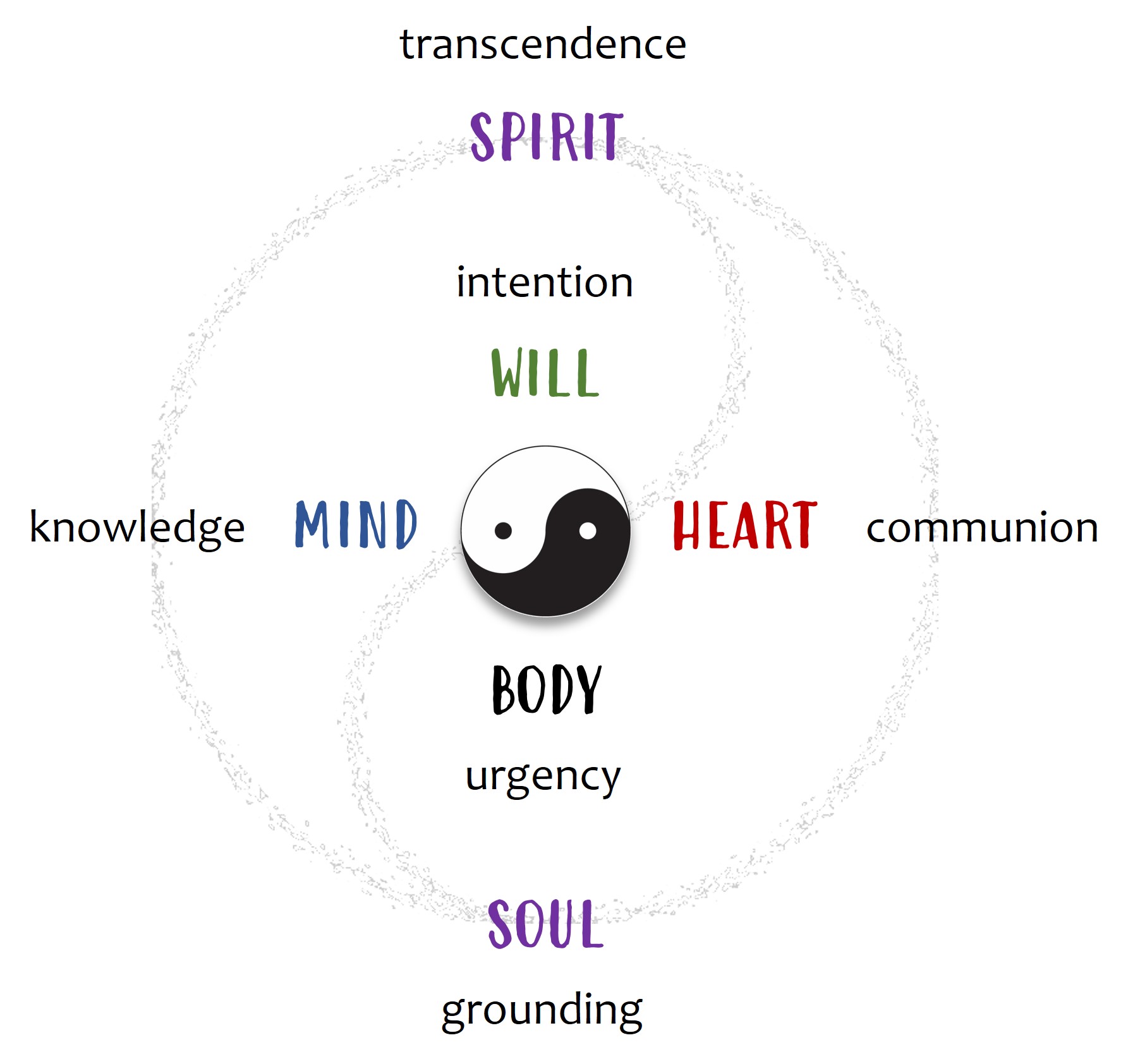
Why don’t we start walking into this question and see where it takes us? The illustration above will serve as a mandala of sorts. At the center of the entire system is the taijitu of Taoism with its swirling balance of Yin and Yang, the archetypal polar principles that push and pull, dance and spin into existence the realm of Ten Thousand Things – the ancient Chinese name for our Universe.
Our interest here will be to understand the internal tensions that must be balanced and brought into harmony for personal and human wellbeing, which in turn is foundational to the health, success, and happiness we seek.
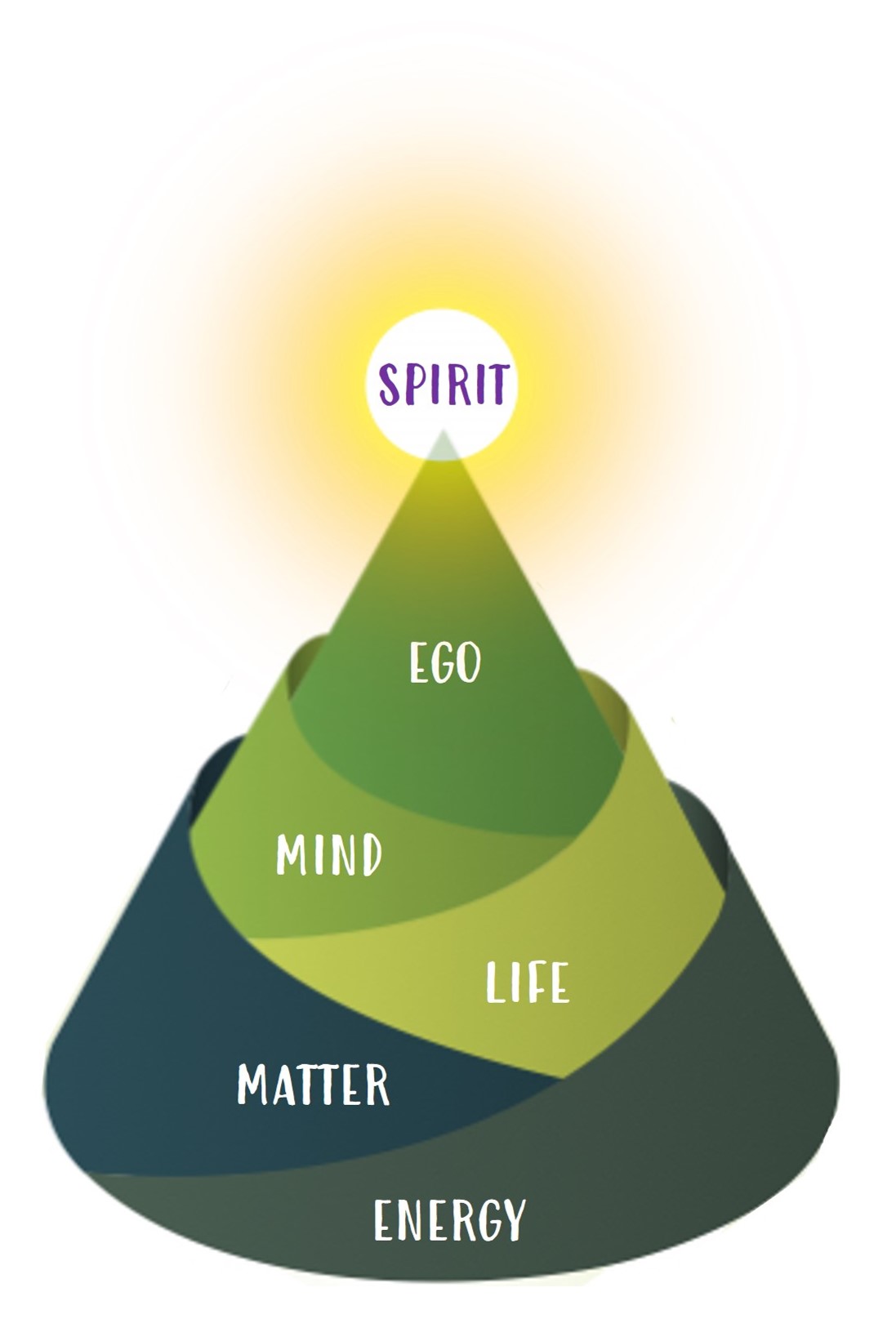
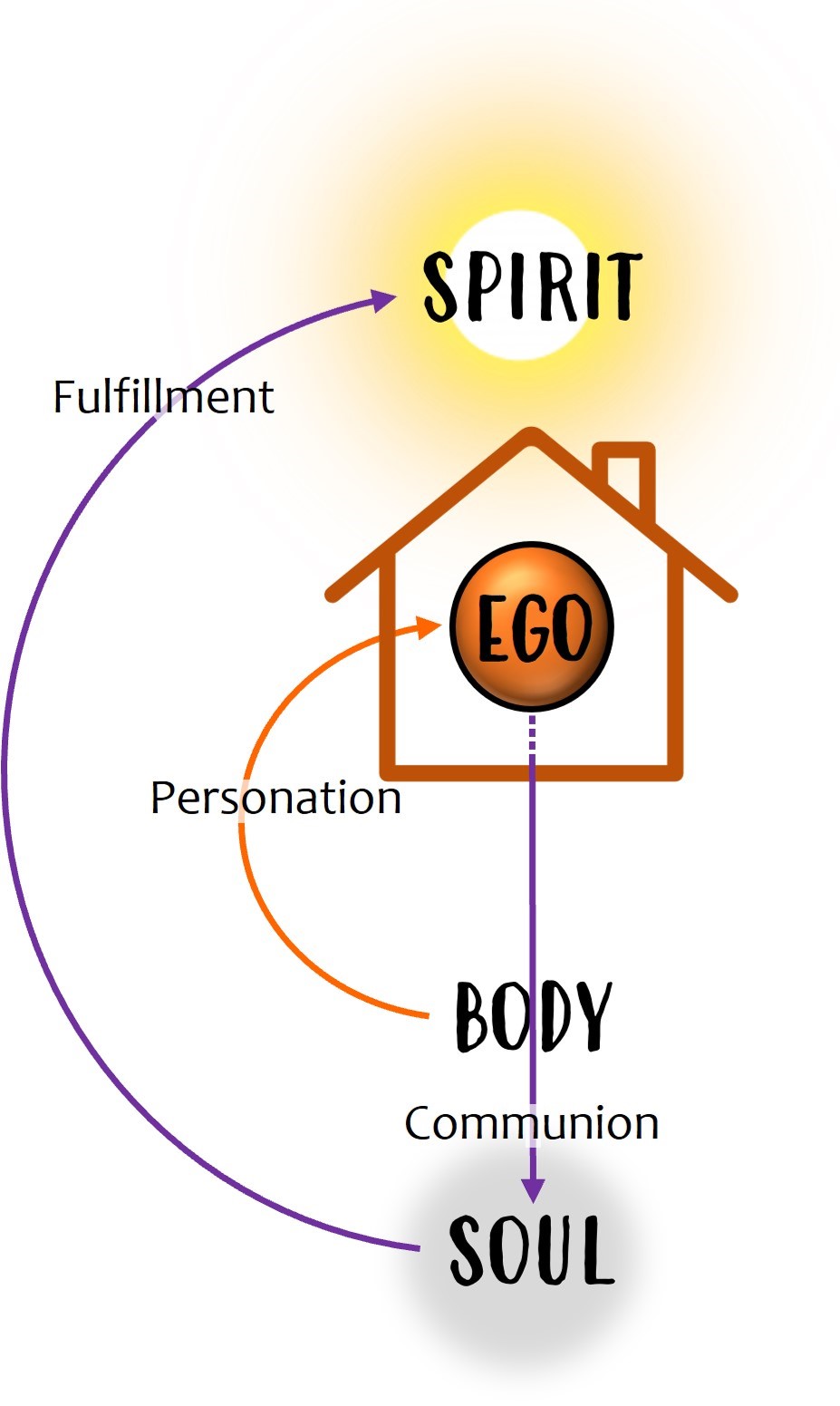
My diagram will function as a map of the distinct centers and strands of consciousness that comprise the essential nature of a human being. The wildcard factor of ego is not explicitly pictured, but sits at the center of Will. The willful ego is what makes each of us unique and has the effect of either amplifying our (self-conscious) sense of wellbeing, or else throwing the whole system into confusion, conflict, and neurotic suffering.
Chasing after, latching on, and gripping down on what we expect to make us happy is, in Buddhism, the tanha (craving) that leads to dukkha (suffering).
Let’s begin, then, with the centers and strands of consciousness that lie closest to the taijitu symbol in the middle. On the vertical axis we see the centers named Body and Will, which co-anchor the strands of urgency and purpose.
The Body is itself a complex system of networks, tissues, organs, glands, cells and molecules which facilitate the countless urgencies that generate and sustain its lifeforce. In this context, urgency does not equate to emergency, but refers rather to the “urges” – needs, appetites, drives, desires, impulses, rhythms and reflexes that ensure healthy function, growth, and repair.
Breathing, for example, is an urgency that brings oxygen into the lungs and bloodstream, as it expels carbon dioxide which would otherwise reach toxic levels and cause cell death.
Opposite to the Body and its urgencies is the center of Will. Both centers are about action, but while the urgencies in the Body are mostly autonomic and unconscious, the Will is devoted to conscious control, personal agency, and intentional behavior. Purpose is our summary term for these types of voluntary action. Elsewhere I have distinguished these two centers and strands as visceral intelligence (Body: VQ1) and volitional intelligence (Will: VQ2).
Doing anything “on purpose,” “with purpose,” or “for a purpose” assumes a certain degree of freedom from the compulsory urgencies of simply staying alive. Whereas the deliberation that precedes a chosen action involves Mind and Heart in conversation (as we’ll see shortly), making choices and taking action is the unique contribution of Will.
It is helpful to think of Will as a horse and ego as the rider. In healthy development they work together, with the rider steering the horse into experiences that are wholesome, productive, and useful.
When the rider is distracted, confused, lost, or asleep in the saddle, however, the horse has no constructive guidance and things can quickly fall out of balance, veering farther off course.
Shifting to the horizontal axis now brings our focus to the centers of consciousness named Mind and Heart, which correspond respectively to the strands of knowledge and communion.
In this context, knowledge is “about” something and based in an objectivity that draws a strong distinction between Mind and its object. This objective distance between the Mind and what it knows – or more accurately, what it thinks it knows – is the salient feature and “secret power” in Western science. The knowledge catalog about Reality it has recorded through the centuries is truly astonishing.
Offering a counterbalancing effect across the larger system of consciousness is the Heart center and its intelligence for communion. If knowledge builds on the distance afforded by objectivity, communion is the experience of connection where objectivity dissolves, feeling overrules logic, and a deeper bond is formed.
Not objectivity but intimacy: knowledge about is counterbalanced by communion with the other. The union (being one) in “communion” draws the com- (with) into stronger ties of partnership and mutual identity.
All together, these four centers and strands of consciousness – Body/urgency, Will/purpose, Mind/knowledge, and Heart/communion – enable us to construct the world in which we live and navigate a life of meaning.
To complete the picture, however, we need to add two more centers on the strand associated with spiritual intelligence (SQ), which are named Soul (SQ1) and Spirit (SQ2). Only recently has spiritual intelligence been the subject of serious research, resulting in its finally being added to the “braid” of human quadratic intelligence: VQ1/VQ2, EQ (emotional), RQ (rational), and SQ1/SQ2.
Spiritual intelligence has nothing to do with being religious, going to church, or subscribing to some denominational orthodoxy.
While we should hope that every religion is a product of spiritual intelligence, many of them actively work to limit or even disable it in their members.
Soul is the center that keeps you rooted in the present, grounded in Reality, far below all of that world construction and role-play business going on at the surface of society. Your Soul provides grounding for deep solitude and inner peace, drawing the Heart’s communion more inward to an ineffable oneness in Being. In return, Soul supplies to the Heart an integrity and freedom that prevent it from slipping off-center and collapsing into unhealthy attachment.
At the center of Soul, according to Eastern philosophy, Reality as Ground is “nondual”: neither one thing or another, but Nothing (sunya, no thing), within and prior to the differentiation of things. Neither here nor there, but NowHere.
Meditation techniques enable the practitioner to descend through the Body’s urgencies to this quiet place of inner peace: Here and Now.
At the far upper pole on this strand of spiritual intelligence is the center of Spirit, where we have a similar counterbalancing effect with Soul as that between Body and Will, Mind and Heart. Whereas the Soul dwells in the grounding mystery of Being, Spirit soars like a bird or butterfly (favorite metaphors from the spiritual wisdom traditions) through the open air above the field where our personal identities and quality worlds crowd into each other.
Transcendence refers to the act of “going beyond” me here and you there, to the higher wholeness of both (and all) of us together, where the diversity of our unique identities is celebrated and adds strength to the Whole.
At this center of consciousness, according to Western psychology, Reality is “transpersonal”: elevating awareness beyond the boundaries of personal identity and categories of knowledge by which the Mind constructs meaning, creating new synergies of inclusive community. Methods of dialogue enable partners to ascend through their separate frameworks of meaning and belief, in a mutual quest for the higher perspective of Truth and a shared understanding.
All of these distinct centers and strands of consciousness are in you, naturally coordinated by the evolutionary aim of human wellbeing.
Start noticing their power in you. Cultivate a sensitivity to their creative tension and balance. When you get knocked off the path or lose your way, let them bring you back into alignment and refresh your commitment to being whole, seeking harmony, and living the liberated life.



 Tracts of Revolution