
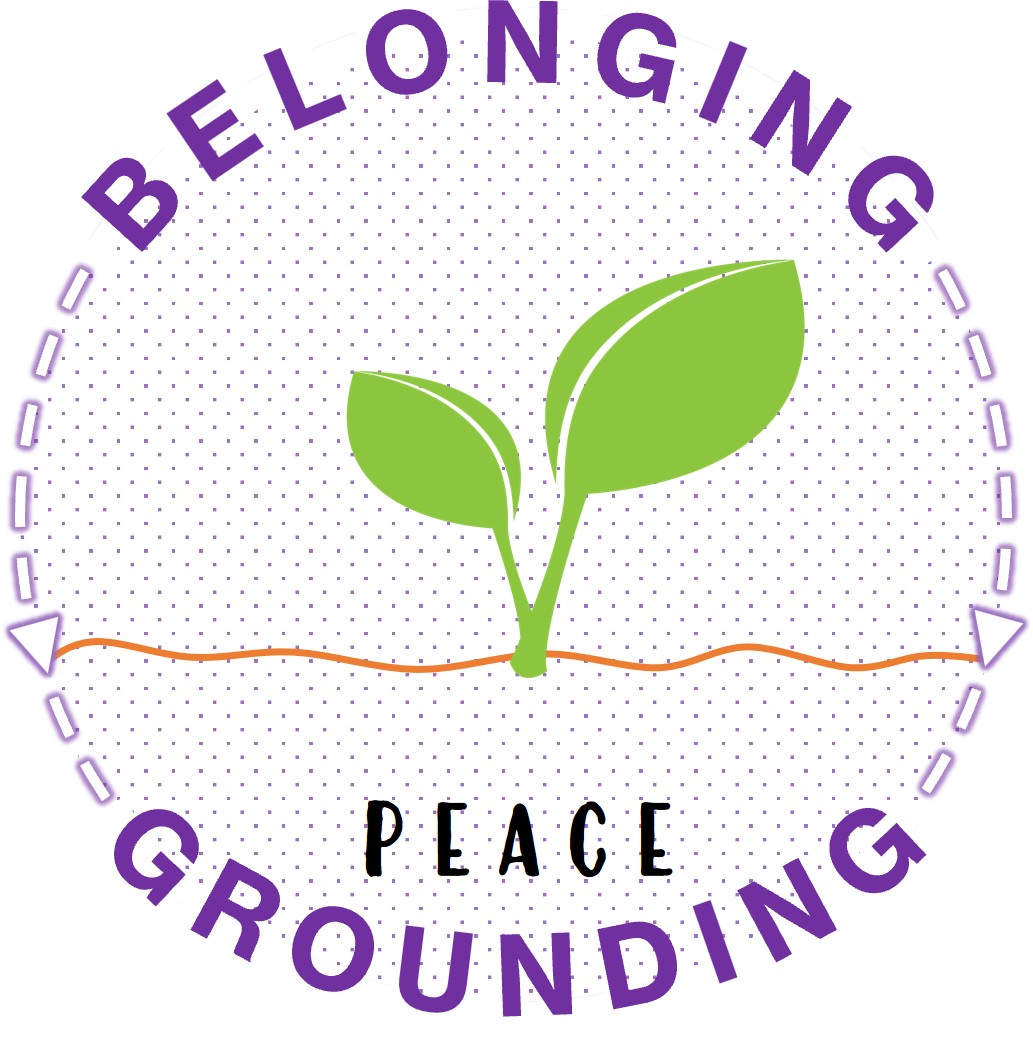
That little plant in the illustration to the left is rooted in a Mystery of deeper oneness named Being. It is also connected inside a Web of higher wholeness named Universe.
If our plant knows any of this, it is not at some epistemic level of knowing, using logic and rational thought to construct a mythological or mathematical model of its existence. It wouldn’t be gnostic, either, but that gets us closer to what’s going on.
Epistemic knowledge is constructed knowledge, based on sense perception, objective observation, inferential and logical theory-building. Gnostic knowledge is more intuitive and embodied: what it feels like to be a plant, or a bat, a dog, or a human.
Gnostic knowledge isn’t knowledge-about but knowledge-of, referring to an inner knowing that is essentially ineffable, or beyond the reach of words.
Humans evolved with both knowledge pathways, and between them the gnostic (intuitive and embodied knowledge) is deeper and older – by far.
In the first days and months of life – corresponding to the dawn of evolution for the human species – we are gathering a nonrational sense of our existence.
With a provident grounding in the charge of taller powers who care about us, a deep interior state of calm is fostered, known outside neuroscience as inner Peace.
Peace is gnostic knowledge. Sometimes named faith or trusting surrender, it is the in-sight that we are held in a present, gracious, and supportive Mystery.
Our path to Peace is inward and leads into the depths of Being. Underneath our self-conscious center of security, identity, and self-esteem is Something that is no-thing, a Mystery we can feel but can’t name, except metaphorically. The mystical traditions of Sophia Perennis name it the Ground of Being.

This intuitive feeling of present support from deep within allows a center of self-conscious experience, which goes by the Latin name ego (meaning “I”), to bring balance to our developing personality.
The human personality occupies a threshold between biological factors of temperament (in the body) and social traits of identity (in the world), called character. Of course, character is also a figure of story, referring to the identity (or identities) we play on the social performance stage.
Freedom in this context is freedom from the impulses and urgencies of the body, as well as freedom for the roles we play in society. Ego is where our freedom in both senses is centered.

As our centered (and increasingly free) self-conscious experience continues to develop, the intention in our behavior finds greater clarity of Purpose. Assuming we are free to choose and act the way we do, what is our intended aim and goal?
Purpose can be easily misunderstood when it is confused with a plan, mission, or assignment originating outside us. In contrast, what might be named human purpose refers to our focus of intention – doing something “on purpose” and “with purpose.”
It isn’t necessary for purpose to be extraverted and active, in doing things of outer value. Sitting quietly in meditation and directing our intention to the Present Mystery of Being provides freedom with a sacred focus, but without a practical or strategic outcome.

Humans invest the focus and energy of our intention in the project of making Meaning. We make meaning in giving names to things, connecting thoughts and words, composing stories and theories, and constructing enveloping ideologies and worldviews that orient our existence in time and place.
Victor Frankl’s popular book title Man’s Search for Meaning is based on the assumption that meaning is out there to be found – waiting for us like a vein of gold in the rock. This assumption is mistaken.
Meaning is made, not found. It isn’t an embedded fact in Reality, but rather an artifact of our mind. We conceive meaning and give it birth in words, symbols, stories, and beliefs.
A reassuring belief for thousands around the world conceives of the Universe as god’s intentional Creation, which implies a god-given meaning inherent to the very nature of existence. This is the likely background of Frankl’s understanding of meaning and the human “search” for it.
Still, and nevertheless, god and god’s Creation are themselves human constructs of meaning. (This realization marks the transition from theism to post-theism in the evolution of religion.)

The meaningful worlds we create are not merely for our private amusement, however. Given our definition of world as a logically coherent construct of value and significance inside of which humans live, cohabit, and interact, its proper context is cultural in scope.
Again, we are speaking here not of the so-called “real world” (or Reality), but of the mind-made shelters of meaning that humans share together – and frequently fight over. Our world carries and reflects back to us the meaning of our existence.
From the Greek word ex(s)istere, existence is conceived as all things standing out of a deeper oneness (Being, or the Ground of Being) and standing together in a higher wholeness (the Universe: “turning as one”).
Another word with similar meaning is community – “together as one.” Here, personal egos stand out as individuals from a nonpersonal human nature, connecting and contributing to their transpersonal life together in community.
True community represents the apogee (high point) and apotheosis (full actualization) of our human potential. The Christian-existentialist theologian Paul Tillich named it spiritual community, to acknowledge its deep taproot in the grounding mystery of being-itself. It is in cultural contexts of social existence that humans connect, share meaning, build trust, take care of one another, and nurture the fruits of their Love.
Our little plant in the illustration has at last reached maturity. From its roots deep in the Ground of Peace, centered in Freedom and focused in Purpose, it carries out the important work of making Meaning, creating a world big enough to include many others and even future generations. A world where all belong and Love can flourish.
 Tracts of Revolution