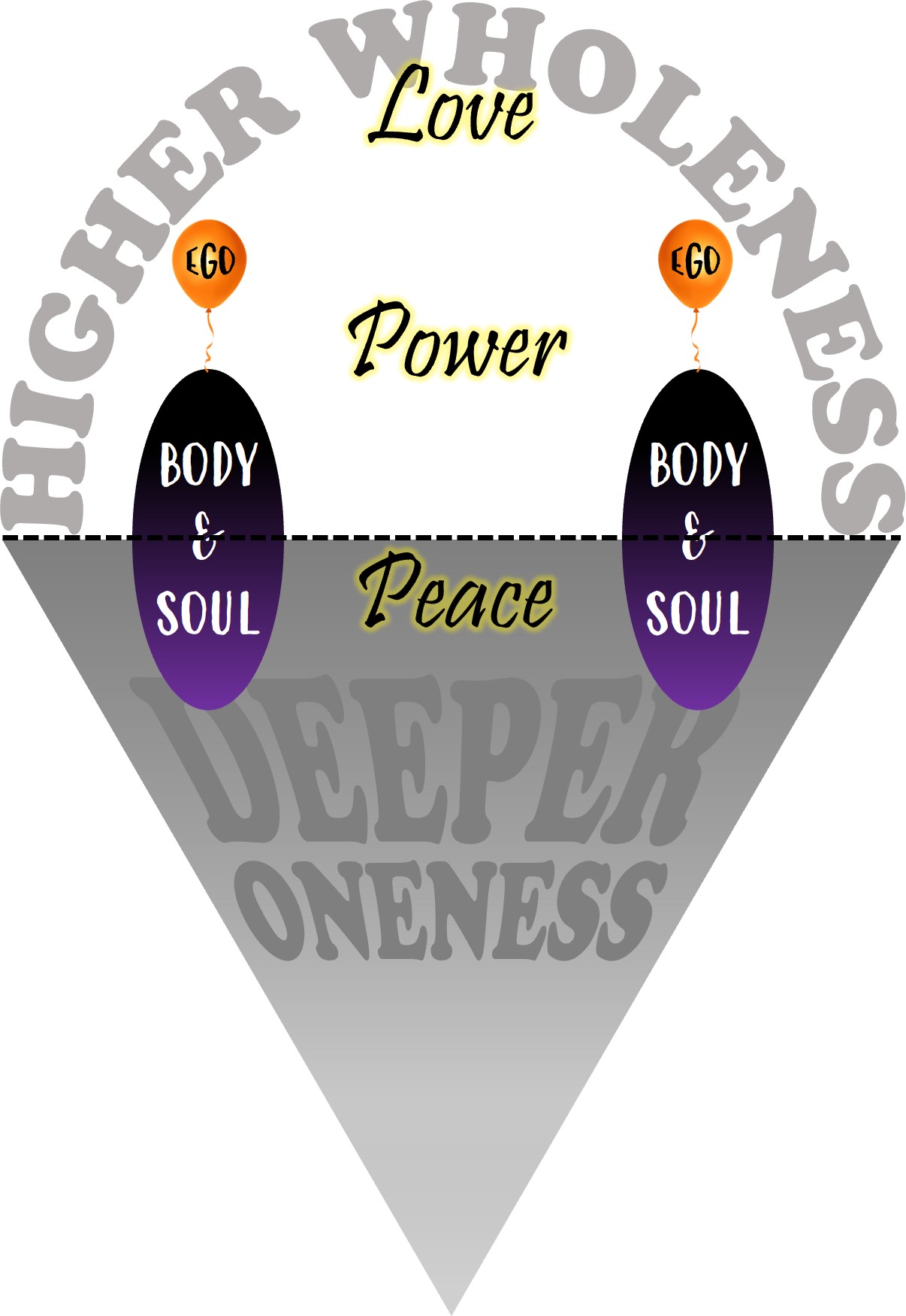
In the degree we each lack peace within ourselves, the power dynamics between us will be misaligned, dysfunctional and mutually damaging, allowing for very little possibility of love lifting us beyond our differences into selfless goodwill and genuine community.
The worldwide spiritual wisdom tradition known as Sophia Perennis holds a communal vision for humanity, saved, as it were, not by our technical ingenuity or an escape to heaven, but by the liberating power of love, grounded in peace. This tradition flows underneath and cuts across all the world cultures, gathering and safeguarding the insights, principles, and techniques for cultivating the spiritual practice of a liberated life.
Plumbing the mystical depths of human experience and scaling the heights of our most enlightened ethical aspirations, Sophia Perennis is a timeless – and always timely – testimony to our better angels.
As a vision of human wellbeing and fulfillment, its elements cannot be more simple, straightforward, and clear. It is we who make it complicated. Let’s step through this together in an effort to understand its message and identify where things tend to get stuck and twisted up in unnecessary complications.
The illustration above depicts two individuals, you and me, each a self-conscious person (an ego) trying to hang on and make our way in the world. Our egos, referring to the centered “I” of our individual self-conscious experience, are depicted as balloons tethered to a human nature comprised of an animal body and a spiritual soul.
The “and” is intentional and quite emphatic, as body-and-soul are not two things, two parts, or – as taught in many religions – our immortal self (soul) inside a mortal shell (body).
According to Sophia Perennis, our true self is a complementarity, or even more essentially, a communion of body and soul. So, while it may seem obvious to us that we have a body and have a soul, this possessive regard of our human nature turns out to be nothing but a mirage-effect of observing ourselves from the tethered position of ego.
In fact, ego is itself only an encapsulated quantum of animate (body-and-soul) consciousness, siphoned and contained inside its own balloon of reflexive (i.e., self-) awareness.
Our essential nature, in contrast to our conditioned and inflated identity (ego), is in constant touch with Reality. The body is connected to the sensory-physical environment, its Web of Life, and to the cosmic home of our Universe. It depends on, participates in, and contributes to the higher wholeness of all things. Inwardly, descending the interior depths of consciousness, the soul rests in the grounding mystery and deeper oneness of being-itself. Deep within, our essential nature dwells in Being, in the pure presence of Here and Now.
Deeper oneness and higher wholeness, the generative Ground of Being and the manifold Unity of Existence, the hidden wellspring and universal order of all things – these are together the Yin and the Yang, respectively, of the Tao we call Reality.
A consequence of ego’s separation from our essential nature is a certain degree of insecurity – of feeling isolated, exposed, and vulnerable inside a socially constructed and self-made illusion.
When we began our individual journeys to an ego-centered identity, we compensated for this loss of existential security by attaching ourselves, first to Mother, then to others, and from there to our kind (race, ethnicity, class, party, and creed), as well as to the status symbols of our tribe.
Ego is primarily a center of self-conscious experience, but it’s also an actor who slips into suits to play various roles on the social stage. From childhood, through youth, and well into adulthood, the principal share of our attention and energy is invested in this project of taking on identity contracts and becoming (or trying to become) somebody special.
The more profound our insecurity, the tighter we cling to our attachments and the smaller our identity shrinks.
Identifying as a White, middle class, Southern Baptist Christian (or whatever) means that we identify with other White, middle class, Southern Baptist Christians (and so on). They are the ones around whom we feel safe and comfortable. We like them because they are like us.
Others, though, who are of different races, classes, backgrounds and beliefs, pose a threat to our small identity. For our own safety we try to avoid them, keeping them at a distance with bigoted stereotypes, and even vote for politicians who legislate against their equal rights and freedoms. Our lack of inner peace (i.e., our existential insecurity) drives our use of power in ways that are biased in our favor and damaging to those whose mere existence threatens our crabbed and fragile identity.
Needless to say, when we are entangled in codependent relationships and running from or fighting against others who are just too different, too alien, to be trusted, all pathways to transpersonal community and genuine love are blocked. More accurately, such pathways are simply not available to us because our love of power – driven by a lack of peace – compels our defensive resistance to the power of love.
Now we can see how the world got into its current condition. Hopefully, too, we have a better understanding of our own complicity in the mess about which we so often fret and complain.
Even more importantly, we may be starting to see our way through to the wellbeing and fulfillment that we, together with all of our fellow human beings, so deeply long to find.
 Tracts of Revolution