
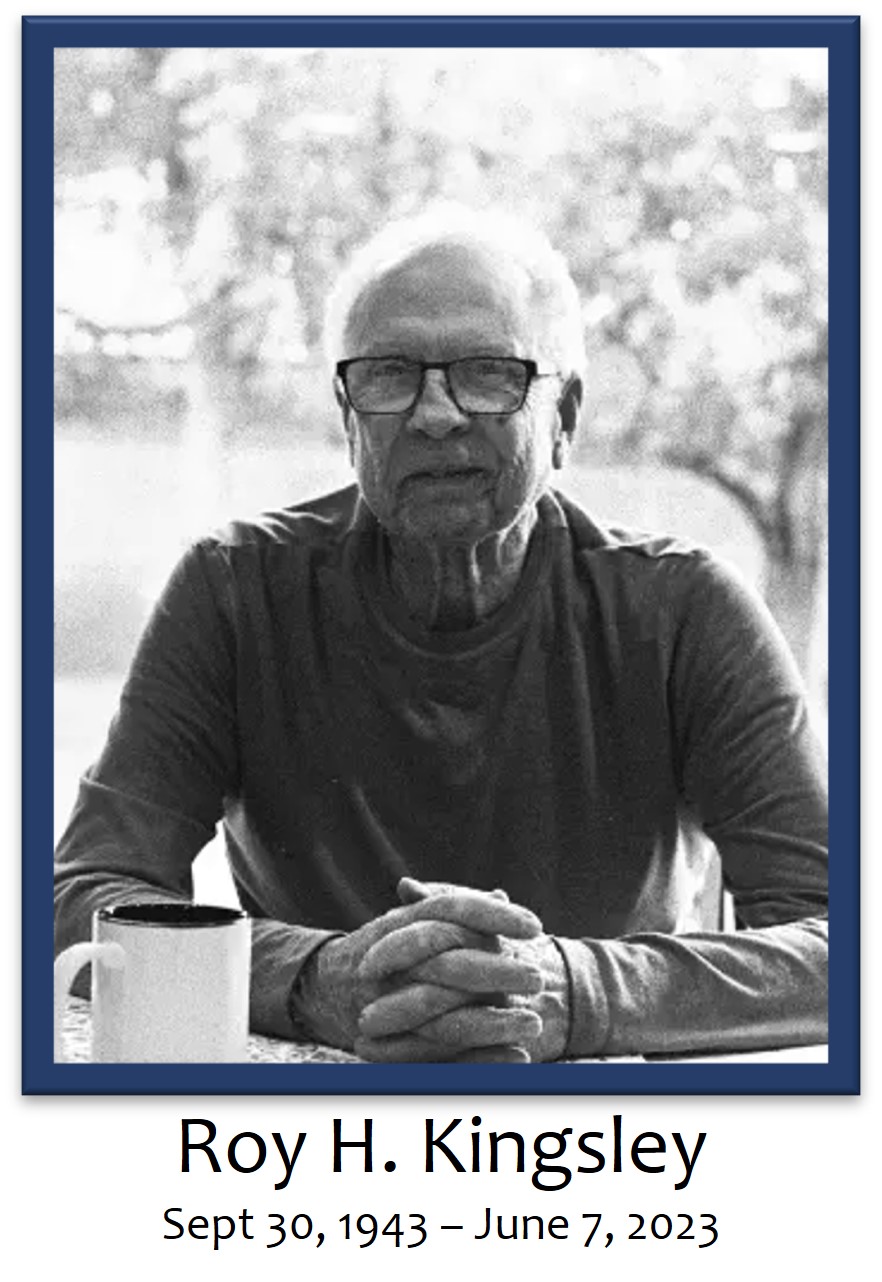
A mentor and friend of mine passed away recently. He was 79 years old and a one-time member of a church I served back in my ministry days. He and his wife were good friends with another couple who were founding members of that same congregation.
The supernatural orientation of religion, its tendency for getting tangled up with in-fighting, and the curious hypocrisy of many believers had kept him from getting too deeply involved over the years.
When his friends invited him and his wife to a small group study I was facilitating, he found the topics of conversation not just interesting but surprisingly relevant to his life. It was hard to believe at first how far the Christian Church had fallen out of alignment with Jesus the wisdom teacher, ethical revolutionary and social activist.
Jesus felt to him like a kindred spirit, more like a man with a vision for a New Humanity than a god-in-disguise with plane tickets for a chosen few.
My new acquaintance struck me as one who was intentionally engaged in the business of living a meaningful life. As I reflect now on his example, on the legacy he left for me and others, five principles surface in my memory.
These Five Principles articulate a more general philosophy of life that regards meaning as an act of intention (which the ‘-ing’ might imply) whereby we purposefully project around ourselves a mental and moral habitation of value, order, and significance known as our quality world.
Rather than going out to find meaning, this approach surmises that meaning in life – even the meaning of life – is a creative product of active intention and intentional action.
This reference to intention already suggests that meaning is not “out there” just waiting to be found, but both depends on and is a symptom of a certain proficiency in the skills for making life meaningful.
The Five Principles for living a (more) meaningful life that come to mind as I remember my friend and mentor should be understood as a methodology, a consistent approach, set of priorities, and practical rules for living. I’m sure he wasn’t perfect at it, and neither should we expect perfection from ourselves or each other.
As we get stronger with these Five Principles, however, life is sure to grow more meaningful.
1. Question Everything
Instead of allowing himself to settle into certainty and lock his mind behind the bars of conviction, my friend was always asking questions. Whether he posed his questions out loud to others or just worked them over in quiet meditation, this principle of interrogating claims, motives, sources, facts and assumptions put him in good company with the Skeptics of classical Greek philosophy who insisted that Reality is not what we think or believe.
Because our knowledge claims are not plucked directly from Reality but constructed in our minds, we can always get a little (or a lot) closer to the way things really are.
This deconstruction process may come across to others as quarrelsome, disrespectful, or even sacrilegious, but only in the degree they have abandoned the quest for Truth to become devotees of idols. My own irritation over having a belief questioned by this visitor’s skeptical curiosity exposed a tendency in me that would take years to overcome.
I’m still working on it.
2. Consider Different Perspectives
Once we can break free of conviction by the realization that Reality is not what we think or believe, we begin to develop an appreciation for the variety of angles, opinions, and perspectives out there. Because my friend and mentor was a generation older than me, and because his background experiences and lens on life were so different from mine, his participation in our small group confronted me with the challenge of accommodating a different way of looking at things.
It was an illuminating – and at times bracing – reminder that my claims on Truth were also a matter of perspective, one among many.
Even if we aren’t granted the opportunity to articulate and clarify our perspective in juxtaposition to someone else’s vantage-point of understanding, we can still practice this principle by asking ourselves whether there are other ways of approaching a topic or question of life. Just giving time to imagining what those different approaches might be serves to loosen our grip on the perspective we currently hold.
When practiced in the company of others who see things differently than we do, our perspective has a chance to stretch open for a larger frame on Reality and a longer view on Life.
3. Think It Through
If I call my friend a rationalist, it would not be to suggest that he could only think in binary terms of black and white, this or that, like the zeros and ones of computer code and the digital logic he built his business on as a software developer and entrepreneur. In the spirit of my earlier comments, I might prefer to call him a rational skeptic: someone who used his thinking intelligence to question and test and refine his perspective on things – and help others (like me) do the same.
The practice of thinking things through is about much more than merely reciting our beliefs to ourselves and defending them to others.
It involves tracing out the implications of what we are considering, what its broader associations are, how similar or different it is relative to other beliefs we currently hold, and what relevant impact or practical consequence might likely follow upon our agreement with it.
Such rational skills are vanishingly rare these days, resulting in more people getting swept up in social media echo chambers, lured into conspiracy thinking, and making snap judgments based on how they feel in the moment.
4. Cultivate Close Relationships
If we are fortunate to be on a bed when we die, what will matter most to us is not our dogmatic beliefs or material possessions, but the loved ones who gather in witness. My mentor was a dear friend to me and my family because we shared an appreciation for life as a journey between our first breath and last. We walk with others for a time in sacred company and then take them with us in our hearts.
My circumstances in his last days did not afford the opportunity for a final farewell, leaving me to fondly reflect now on the meaningful times we had together.
I’m not saying that relationships are the only things that matter in life, but as our journey began in a union followed by a separation, we may hope to rest in the end among a communion of loved ones before we separate a final time.
Even if this isn’t how it goes for us, the company of kin and close friends along the way is the magic that both deepens and lengthens the meaning of our life.
But here’s the thing: there’s a formula to this magic. It doesn’t just happen on its own. When my friend was with me, I felt his presence. He genuinely wanted to know how I was doing and what I was up to. A consummate storyteller, he could deftly recall an experience of his own that resonated with something I said, throwing light on a challenge I was facing, helping me realize that I wasn’t alone.
5. Honor the Mystery
One way I might describe my departed mentor and friend is that he was a rational skeptic with mystical sensibilities.
The term ‘mystical’ shares a root with another term, mystery, referring to a reality or dimension of Reality that transcends our words, our thoughts, and even our minds. In the presence of this Mystery we can only be silent – literally close our mouth (Greek muein) in humble recognition of the fact that words and thoughts naïvely presume to define what is indefinite, boundless, elusive and ineffable.
This is another reason I might describe my friend as a rational skeptic, and not a hardcore rationalist for whom everything must be logically graspable and boxed inside the categories of knowledge. He appreciated terms like grounding Mystery, the present mystery of Reality, and Ground of Being as naming something that can’t be named, a Presence that isn’t a problem to be solved but a depth and grandeur to be honored.
If contemplative silence is our most appropriate response to this Mystery, then perhaps the best way to honor it in life is to question everything.
And so we have come full circle.
I miss my friend. He leaves behind a loving family and companions who will continue his legacy, bringing his searching spirit, inspiring example, and love of life with them into their own quality worlds.
Because of him, we can all live more meaningful lives.
 Tracts of Revolution