When Benjamin Franklin, John Adams, and Thomas Jefferson agreed on the phrase “Out of many, one” (in Latin e pluribus unum) for the Great Seal of the United States, their idea was of the new nation as a manifold unity of individuals. America’s diversity would be the secret to its success – particularly as that diversity is harnessed in a synergy of shared values, reciprocal commitments, mutual responsibilities, and common aspirations.
The “One out of many” refers to a higher wholeness that doesn’t merely absorb and neutralize their differences, but instead lifts them into a complex of relationships where each is affirmed, embraced, and included in the whole. In this way, the American nation would be a political fulfillment analogous to planet Earth and its diversified web of life. Their vision was not just interpersonal (between persons), but transpersonal (beyond the person).
Ever since then, “e pluribus unum” is displayed on the Great Seal – though very rarely, and only on much smaller scales, has it been actualized in the broader American experience.
It seems that the more diverse our American population becomes, the larger and more unwieldy the project grows of making these many into one. “Intersectional identity” rights seem to be pushing us apart, as every factor of distinction demands special recognition and protection. It’s become less about what we might have in common than what makes us different, dividing us further into majority and minority classes that can’t understand each other and couldn’t care less.
A solution to this drift toward chaos that is typically offered by a majority group involves simply imposing a standard on everyone and then instituting some type of “affirmative action” that requires a more balanced representation. The composition of a company workforce, a voting district, or a political administration should resemble the population it serves. By enforcing diversity at the table, it is hoped that the unity we long for will happen on its own.
But it hasn’t happened on its own. The higher wholeness of unum (unity) isn’t merely a matter of adding up differences into a sum that reflects everyone.
What’s missing? The way to genuine community is neither through desegregation, affirmative action, a simple majority vote – nor, going in the opposite direction, will it come about through erasing our differences or defining minorities out of existence.
Ours is a distinctively “western” challenge. The ancient Greeks were the first to conceive of the individual as an “atomic” unit, a basic element that cannot be split or further reduced. The way forward for them would lay in figuring out how these atoms of individuals can cooperate as an assembly of irreducible quanta, which became a driving principle informing Greek science and the Athenian experiment in democracy.
If the individual thing (atom, element, object or person) is foundational, then every truth and all possibilities will be arithmetical – adding, subtracting, multiplying, and dividing whatever is there to be counted.
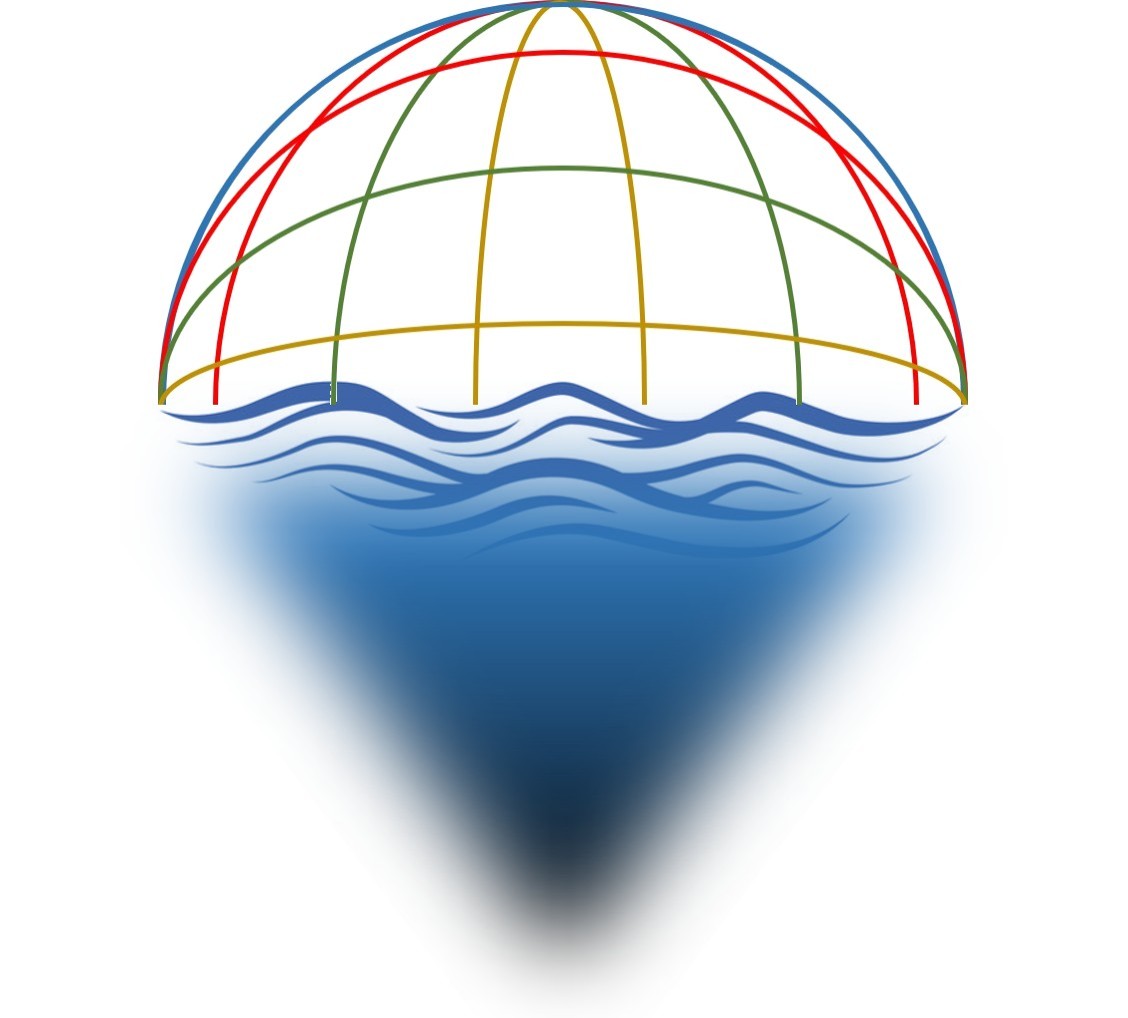
Looking farther to the East, we find another principle at work, one informing an alternative cosmology, politics, medicine, and morality to what found favor in the West. The many individuals – in Chinese philosophy, the “ten thousand things” – are not regarded as atoms in the void, to be combined and assembled in various configurations. Instead, each existing thing (atom, element, object or person) is a manifestation of deeper oneness.
Eastern philosophy doesn’t start with the solitary, irreducible unit of individual existence. Instead – or perhaps we should say, more essentially – it looks into the individual to the grounding mystery of Being. This Ground is not reached by splitting things into pieces, and then these pieces into even more basic components, until some fundamental bedrock reality is reached.
The grounding mystery of deeper oneness is the undifferentiated, unmanifested Nothingness (no-thingness) out of which all things arise and in which they have their being.
Could this insight from the East help us in the West break through our “arithmetical impasse” – the barrier to higher wholeness reinforced by our effort to make harmony by merely adding more parts or changing their arrangement? What wisdom do we find here?
As we gaze across the astonishing diversity of our American population – generations, races, sexes, genders, classes, creeds, abilities and needs – any pursuit of a more perfect union (e pluribus unum) must begin by meditating deeper into the grounding mystery within. As our contemplation descends in this direction, that multitude of distinctions comes to resolve with the insight of our essential humanity – not our common humanity, but in the existential mystery of human be-ing (Greek esse).
Each of us is grounded in this mystery, which is not merely beneath our differences but shines out of the deeper oneness of what we are.
E uno, plures: Out of one, many.
This larger, dialogical (East-West), vision considers the “many” on a horizontal plane, with the “one” of higher wholeness all around and including the many, like the expansive sky above, and the “one” of deeper oneness within the many, as the unfathomed ocean lies beneath and takes form in the myriad waves at its surface.
The unum above is holistic, universal, and inclusive. The uno below is nondual, essential, and absolute. E pluribus unum is the dynamic complexity of togetherness (i.e., community), while e uno, plures beholds the grounding mystery in the unqualified depths of solitude.
Our western fascination with the individual, along with our liberty to exist just as we are, has generated a socio-political landscape where merely getting along, much less working together in service to communal wellbeing, is a fast-fading dream.
Our only way forward, in hopes of fulfilling that dream, invites us to live with greater awareness of the deep mystery within ourselves, and of our existence as fellow humans and sentient beings on this planet, rolling through brief cycles of time upon an eternal sea of Being.
 Tracts of Revolution